
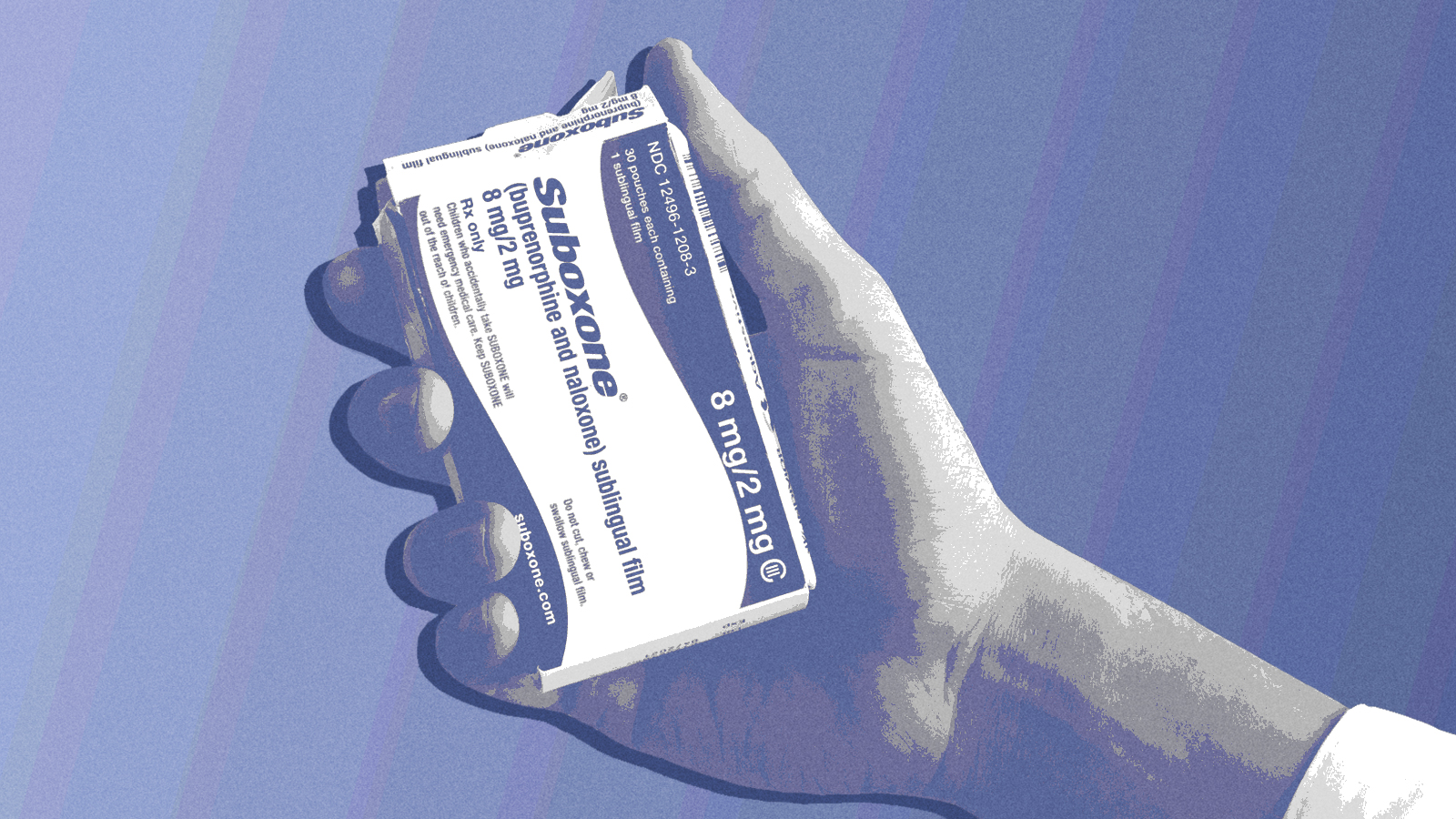

If you’re researching Suboxone alternatives, you may be considering treatment for opioid use disorder (OUD) or thinking about switching to a new medication due to cost concerns or side effects. Maybe you’re just trying to separate common medication myths from the facts and understand your options before talking with your care team.
There are several FDA-approved medications for OUD, and each has its own benefits and trade-offs. This guide provides a balanced overview of each Suboxone alternative so you can have a more informed conversation with your clinician about which treatment may be right for you.
What are the main Suboxone alternatives?
Buprenorphine-based alternatives to Suboxone include generic buprenorphine, Zubsolv®, and long-acting injectables like Sublocade® and Brixadi®. Other alternatives are methadone and naltrexone. Naltrexone comes as a generic daily pill or Vivitrol®, a monthly extended-release injection. All of these options are FDA-approved for OUD, but they differ in active ingredients, formulations, dosing strengths, and accessibility.
Key facts about Suboxone alternatives
Here are several important things to know as you compare each Suboxone alternative:
- Generic buprenorphine (formerly marketed as Subutex®) contains only buprenorphine without naloxone.
- Zubsolv contains the same active ingredients as Suboxone, but only in tablet form with higher buprenorphine bioavailability.
- Sublocade and Brixadi are long-acting buprenorphine injections administered by a clinician in a healthcare setting.
- Methadone must be dispensed at federally certified opioid treatment programs (OTPs), and some states require daily clinic visits.
- Naltrexone (a generic oral tablet or Vivitrol injection) blocks opioid effects rather than treating withdrawal.
- Telehealth availability varies significantly across these medications.
Why someone might consider a Suboxone alternative
There are many reasons why you might consider a medication besides Suboxone when managing OUD.
Common considerations include:
- Naloxone allergy/sensitivity
- Side effects (oral irritation, taste, or dental concerns) from sublingual films
- Cost or insurance coverage
- Long or severe OUD history requiring increased medication strength
- Stable treatment where a non-agonist becomes clinically appropriate
- Personal preference for a weekly or monthly injection over daily medication
FDA-approved Suboxone alternatives
Below is a clear, high-level look at FDA-approved Suboxone alternatives for OUD treatment.
Generic buprenorphine (formerly Subutex)
Buprenorphine is a partial agonist without naloxone. It may be prescribed to people with naloxone sensitivity or pregnant patients who prefer a naloxone-free medication. Some providers have historically preferred buprenorphine-only medications out of an abundance of caution, but this is due to theoretical risks that have not been observed in practice. One small study on buprenorphine-naloxone during pregnancy found no evidence of harm.
Buprenorphine monoproduct was previously sold as Subutex, but the brand was discontinued in 2011. The generic medication remains available for people with specific needs. Ophelia clinicians primarily prescribe buprenorphine/naloxone (Suboxone) for OUD treatment, but buprenorphine-only may be prescribed when clinically appropriate.
Zubsolv
Zubsolv is a partial agonist that contains buprenorphine/naloxone, the same ingredients as Suboxone. Unlike Suboxone, Zubsolv is only available as a sublingual tablet. Its higher bioavailability means the body absorbs more of its active ingredients from each dose, so smaller doses can have the same effect as larger Suboxone doses.
One drawback of Zubsolv is that it may not be covered by insurance. Since no generic equivalent exists, patients sometimes pay more for Zubsolv vs Suboxone.
Sublocade + Brixadi
Sublocade and Brixadi are partial agonists formulated as long-acting buprenorphine injections that must be administered by a healthcare provider. Sublocade is given monthly, while Brixadi offers weekly and monthly options. Ophelia clinicians may prescribe these medications to patients in select Pennsylvania locations when clinically indicated.
Methadone
Methadone has been FDA-approved for OUD since 1972 and has a strong evidence base for treating severe or long-standing OUD. However, it must be dispensed under specific guidelines.
Federal rules established in 2024 allow stable patients who meet specific criteria to receive up to 28 days of take‑home medication. But some states still require daily dispensing at federally certified opioid treatment programs (OTPs). This requirement can be overwhelming, especially when the nearest OTP is too far for daily visits.
If methadone's daily-dispensing requirements feel like a barrier, our guide to methadone alternatives covers other FDA-approved options. If you're already on methadone and curious about switching, learn how to switch from methadone to suboxone.
Naltrexone + Vivitrol
Naltrexone is an antagonist that blocks the effects of opioids instead of treating withdrawal. It comes in a daily pill or as Vivitrol, a monthly injection that must be administered by a healthcare professional. Unlike buprenorphine, patients taking naltrexone must be opioid-free for a specific period before taking their first dose. This helps avoid precipitated withdrawal, a sudden and severe onset of withdrawal symptoms.
Naltrexone’s opioid-free period is typically 7-10 days after stopping short-acting opioids, or longer after stopping long-acting opioids like methadone. Your clinician can help you understand what to expect from withdrawal and how to start generic naltrexone or Vivitrol at the right time.
Suboxone alternatives compared
No one medication is right for everyone. The best choice depends on your medical history, lifestyle, goals, and whether you prefer a daily or long-lasting medication.
Every medication has its own benefits and tradeoffs. Your clinician will help you compare your options and choose the treatment that aligns with your needs and preferences.
Common myths about Suboxone alternatives
Here are some frequently shared myths you may have come across when researching OUD medications — and what the evidence shows.
Myth: "Natural" alternatives like kratom (including high-potency kratom concentrates such as 7-OH) or ‘herbal detox’ are safer than staying on OUD medication.
Fact: It’s understandable why people look for non-prescription alternatives. However, the FDA has warned that kratom (especially high-potency kratom products like concentrates or 7-OH) can cause liver toxicity, seizures, and substance use disorder — and there's no FDA-approved kratom product for treating opioid withdrawal. Untreated OUD and unsupported withdrawal carry a higher overdose risk than managed medication for OUD. Some herbal remedies show short-term withdrawal-symptom relief, but clinical findings reveal a high risk of bias and no evidence of OUD outcomes like retention and overdose prevention from herbal detox.
Myth: Switching to an alternative means you’re replacing one addiction with another.
Fact: Medications for OUD are clinician-dosed to help manage cravings and withdrawal without producing a high. Taking medication for a chronic condition like OUD is medical treatment. This is not the same as compulsive opioid use.
Myth: Full detox is required before any medication will help.
Fact: That’s only true for certain medications. Antagonists like naltrexone require an opioid-free period before starting to avoid precipitated withdrawal. Buprenorphine-based treatments like Suboxone can be started once you’re in moderate withdrawal to relieve cravings and withdrawal symptoms.
Are Suboxone alternatives as effective as Suboxone?
FDA-approved Suboxone alternatives are clinically effective. However, the level of effectiveness depends on your response, ability to take the medication consistently, and how well it fits your goals and preferences. An OUD-informed clinician can help you compare the benefits and trade-offs of each option and build a treatment plan that aligns with your daily life.
How to choose the right OUD medication for you
Clinicians evaluate several factors before recommending a medication:
- OUD History and Severity: Past use may point to one treatment over another.
- Current Opioid Exposure: Active use affects how and when treatment can be safely started.
- Pregnancy: Some patients and clinicians prefer buprenorphine-only out of an abundance of caution.
- Medications and Health Conditions: Existing conditions and drug interactions may limit options.
- Access Considerations: Long-acting injectables require provider administration, and some states mandate daily methadone clinic treatment. Other treatments may be prescribed through telehealth.
- Coverage and Costs: Insurance and costs vary by plan, state, formulation, and whether the medication is brand name or generic. Generics are typically less expensive.
- Preference and Treatment Goals: Formulation and dosing needs help determine the best fit.
Talk with Ophelia about your treatment options
Ophelia's clinicians prescribe a range of FDA-approved medications for opioid use disorder, tailored to each patient's medical history, symptoms, and goals.
Sublingual buprenorphine options include buprenorphine/naloxone (generic), Suboxone, and Zubsolv, as well as Subutex (buprenorphine mono-product) for patients who cannot take naloxone. For eligible patients, Ophelia can also prescribe long-acting injectables, including Sublocade and Brixadi.
Availability may vary by state. A licensed clinician will review your situation and recommend the most appropriate option for you.
Frequently asked questions about Suboxone alternatives
What is the best Suboxone alternative?
There isn't a single best alternative. The right medication depends on your OUD history, treatment goals, lifestyle, preferences, and clinician recommendation after a thorough evaluation.
Can I switch from Suboxone to a different medication?
Yes, under the guidance of your clinician. The transition process depends on which medication you're switching to, since some options require tapering Suboxone or waiting until it's safe to start.
Is methadone better than Suboxone?
It depends. Methadone and Suboxone are both FDA-approved and effective for OUD. The right choice depends on your medical history, OUD severity, and whether you can regularly attend a methadone clinic or prefer flexible telehealth care.
Which Suboxone alternatives are available through telehealth?
Telehealth availability depends on the medication and where you live. Suboxone, Zubsolv, buprenorphine, and oral naltrexone may be prescribed through telehealth to eligible patients. Methadone can be prescribed virtually in some states, while others require daily clinic visits. Long-acting injectables like Sublocade, Brixadi, and Vivitrol require administration by a healthcare provider. However, Ophelia clinicians may prescribe them to patients in select Pennsylvania locations when clinically indicated.
Is there a generic version of Suboxone?
Yes, generic Suboxone is available as a sublingual film or tablet. It works the same way as the brand-name medication but is often available at a lower cost, depending on insurance coverage.
Sources
- Debelak, K., Morrone, W. R., O'Grady, K. E., & Jones, H. E. (2013). Buprenorphine + naloxone in the treatment of opioid dependence during pregnancy-initial patient care and outcome data. The American Journal on Addictions, 22(3), 252–254. Retrieved August 5, 2026, from https://pubmed.ncbi.nlm.nih.gov/23617867/
- Institute of Medicine (US) Committee on Federal Regulation of Methadone Treatment; Rettig, R. A., & Yarmolinsky, A. (Eds.). (1995). Federal regulation of methadone treatment: Executive summary. National Academies Press. Retrieved August 6, 2026, from https://www.ncbi.nlm.nih.gov/books/NBK232111/
- Frellick, M. (2024, September 27). Rule allows more people with OUD to take methadone at home. MedCentral. Retrieved August 6, 2026, from https://www.medcentral.com/addiction-med/oud/rule-allows-more-people-with-oud-to-take-methadone-at-home
- Substance Abuse and Mental Health Services Administration. (2025, December 22). Methadone take-home flexibility guidance for opioid treatment programs. Retrieved August 6, from https://www.samhsa.gov/substance-use/treatment/opioid-treatment-program/methadone-guidance#map
- Substance Abuse and Mental Health Services Administration. (2018). Medications for opioid use disorder: For healthcare and addiction professionals, policymakers, patients, and families: Updated 2021 (Chapter 3C: Naltrexone). Retrieved August 6, 2026, from https://www.ncbi.nlm.nih.gov/books/NBK574913/
- U.S. Food and Drug Administration. (2026, May 27). Information about medications for opioid use disorder (MOUD). Retrieved August 6, 2026, from https://www.fda.gov/drugs/food-and-drug-administration-overdose-prevention-framework/information-about-medications-opioid-use-disorder-moud
- University of Kentucky (n.d.). About opioid use disorder (OUD) and medications. Retrieved August 7, 2026, from https://healingstudy.uky.edu/about-opioid-use-disorder-and-medications#:~:text=People%20with%20OUD%20who%20stop,death%20by%20at%20least%2050%25
- U.S. Food and Drug Administration. (2025, Dec 2). FDA and kratom. Retrieved August 6, 2026, from https://www.fda.gov/news-events/public-health-focus/fda-and-kratom
- Nematollahi, M. H., Ahmadianmoghadam, M. A., Mehrabani, M., Moghadari, M., Ghorani-Azam, A., & Mehrbani, M. (2022, April). Herbal therapy in opioid withdrawal syndrome: A systematic review of randomized clinical trials. Addiction & Health, 14(2), 152–163. Retrieved August 6, 2026, from https://pmc.ncbi.nlm.nih.gov/articles/PMC9743811/
- National Academies of Sciences, Engineering, and Medicine. (2019, March 20). Medications for opioid use disorder save lives: Introduction. National Academies Press. Retrieved August 6, 2026, from https://www.nationalacademies.org/read/25310/chapter/1
- Santoro, Helen. (2022). Use of buprenorphine during pregnancy better for infants than methadone, study finds. Retrieved August 5, 2026, from https://med.stanford.edu/news/all-news/2022/11/buprenorphine-pregnancy-opioid.html
- Infantino, R., Mattia, C., Locarini, P., Pastore, A. L., Maione, S., & Luongo, L. (2021). Buprenorphine: Far beyond the "ceiling". Biomolecules, 11(6), 816. Retrieved August 6, 2026, from https://pmc.ncbi.nlm.nih.gov/articles/PMC8230089/
- National Academies of Sciences, Engineering, and Medicine. (2022, July 15). The history of methadone and barriers to access for different populations. In C. Stroud, S. M. Posey Norris, & L. Bain (Eds.), Methadone treatment for opioid use disorder: Improving access through regulatory and legal change: Proceedings of a workshop (Chapter 3). National Academies Press. Retrieved August 6, 2026, from https://www.ncbi.nlm.nih.gov/books/NBK585210/


