

It may seem like kratom and 7-OH are everywhere lately. You can find these substances online, at supplement shops, or even at your local gas station. They’re often marketed as “natural” alternatives to prescription medications like Suboxone®, but the reality is more complicated than the packaging suggests.
If you’ve been comparing Suboxone and kratom for the purpose of managing opioid use disorder (OUD), the differences go deeper than you might think. Let’s walk through what these substances are, how they work in the body, what the evidence says about their safety and efficacy, and why only one is FDA-approved.
What is kratom? Origins, forms, usage, + legality
Kratom comes from Mitragyna speciosa, a tropical tree native to areas of Southeast Asia such as Indonesia, Malaysia, and Thailand. Traditionally, people in these regions have used the tree’s leaves as a multi-purpose medicine, with low doses producing a stimulating effect and high doses acting as a sedative.
In the U.S., kratom is sold as:
- Dried leaf powder
- Tea
- Capsules
- Pastes
- Extracts
- Concentrates
You can find it everywhere, from the internet to the convenience store down the street. Some people use this substance to increase mental focus or energy. Others rely on it to self-manage pain, depression, anxiety, opioid withdrawal, and cravings.
Kratom's active compounds: mitragynine vs. 7-OH
Kratom contains over 40 alkaloids, but two psychoactive compounds do most of the heavy lifting:
- Mitragynine: In low doses, this primary alkaloid produces stimulant effects via adrenergic receptors. In high doses, it creates opioid-like effects via the mu-receptor.
- 7-hydroxymitragynine (7-OH): This alkaloid acts on the mu-opioid receptor—the same brain receptor as opioids—to provide pain relief.
Though 7-OH makes up less than 2% of kratom’s total alkaloid content, it’s responsible for much more of the drug’s opioid-like effect than mitragynine.
Legality and safety of kratom
While kratom products are often marketed as “legal” and “herbal,” they exist in a regulatory gray area. Some states have banned them outright. The Food and Drug Administration (FDA) has issued warnings about their safety, and the Drug Enforcement Administration (DEA) has listed kratom as a Drug and Chemical of Concern.
What is 7-hydroxymitragynine (7-OH)?
7-OH is the isolated, concentrated form of the 7-hydroxymitragynine alkaloid that exists naturally in the kratom leaf in very small amounts. However, most 7-OH marketed in the U.S. today is not derived from the kratom leaf. Instead, these products are typically chemically enriched or semi-synthetic 7-OH commonly sold as standalone concentrates, liquid extracts, candies, or beverages.
What to know about the potency of 7-OH
When comparing 7-OH vs kratom, the difference in potency is massive. Whole-leaf kratom contains dozens of alkaloids at naturally low concentrations, with a varied alkaloid profile that limits how any one compound hits the brain. 7-OH exists as a single compound with a much higher concentration.
Natural, isolated 7-OH is roughly:
Most consumer products contain concentrated, synthetic, or semi-synthetic forms of 7-OH, so their real-world effects may be more intense and less predictable than traditional kratom powder. Clinicians specializing in OUD have seen a surge in poison control reports and deaths related to 7-OH, including cases of prolonged withdrawal symptoms in some individuals.
And because 7-OH is a full or near-full mu-agonist, it has no “ceiling effect,” or built-in limit to its effects. That means many people build up a tolerance to it, causing them to take more 7-OH to feel the same effects. Unfortunately, the ceiling effect means that taking more of the drug increases the risk of sedation, respiratory depression, and overdose.
Buprenorphine, the primary active ingredient in Suboxone, works differently. Its ceiling effect means that after a certain point, higher doses do not continue increasing the risk of its most dangerous effects, like those related to breathing. This is one reason why it’s used in a medical setting to help reduce overdose risk.
What is Suboxone + how does it treat OUD?
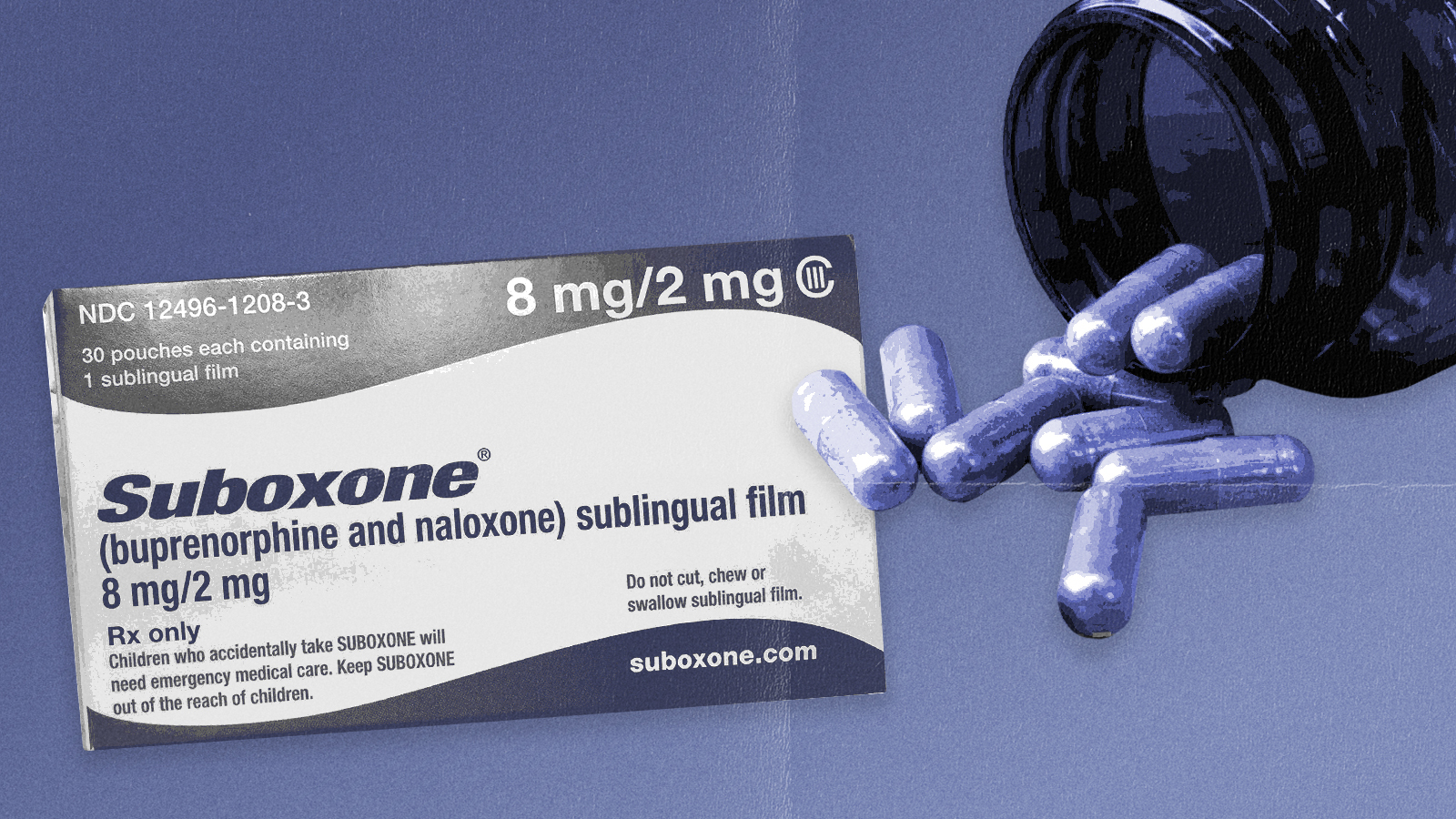
Suboxone is a brand-name drug approved for the management of OUD and withdrawal symptoms.
It works by combining two medications:
- Buprenorphine: This is a partial mu agonist that activates the same receptors in the brain as opioids. Partial activation helps manage cravings and withdrawal symptoms, but it has an earlier plateau effect, or ceiling. That means it does not produce the same high or respiratory depression risk as full opioid agonists, and it does not typically lead to increased tolerance. This combination helps reduce the risk of compulsive use.
- Naloxone: This is an opioid antagonist that blocks the effects of opioids. Combining naloxone with buprenorphine helps deter misuse and abuse because it triggers withdrawal if injected.
Suboxone is FDA-approved for medication-assisted treatment (MAT) of opioid use disorder based on evidence from randomized controlled trials. Access to the medication requires a prescription from a licensed clinician.
Ophelia provides evidence-based OUD care through online telehealth that fits directly into your life. If clinically appropriate, your clinician will send a Suboxone prescription directly to your local pharmacy. A free 15-minute welcome call can help you understand if Ophelia is a good fit for you or a loved one.
What the research actually shows
Here’s what clinical trials, studies, and reviews reveal about the effects of Suboxone on individuals managing OUD:
- Opioid Use: Suboxone’s buprenorphine-naloxone combination is associated with increased remission rates for people with OUD.
- Overdose Deaths: Opioid agonist medications like buprenorphine, the active ingredient in Suboxone, are associated with overdose reductions of 50% or more.
- Harm Risk: Buprenorphine carries a low risk of harm when prescribed by a licensed clinician and monitored by an experienced care team.
- Infectious Disease Transmission: Individuals receiving buprenorphine care are more likely to be tested and receive treatment for HIV, hepatitis C, and sexually transmitted infections. This data shows promise for reducing transmission by improving care among people with OUD.
- Quality of Life: Individuals starting buprenorphine treatment show significant physical, psychological, environmental, and social improvements over time.
In contrast, there is no comparable clinical evidence showing that kratom or 7-OH effectively treats OUD or prevents overdose. In fact, kratom vs Suboxone is the difference between an unpredictable substance and a proven medical treatment.
Suboxone vs. kratom vs. 7-OH: a direct comparison
Here’s the part that matters most: these drugs are not equivalent. Suboxone is a regulated, FDA-approved medication for OUD. Kratom and 7-OH are not subject to federal oversight and carry real, documented risks.
Risks of using kratom or 7-OH for opioid withdrawal or cravings
Dependence + withdrawal
Kratom physical dependence is very real and often underappreciated. High dosages of kratom pose physical risk. Even minor usage can cause adverse effects, such as:
- Muscle pain
- Dry mouth
- Anorexia and/or weight loss
- Chills
- Nausea and vomiting
- Constipation
- Liver damage
- Dizziness
- Insomnia
- Hallucinations
- Seizure
While human data on 7-OH is limited, its potency suggests dependence risk could be even higher than kratom’s.
Overdose risk + naloxone
The Centers for Disease Control and Prevention (CDC) and the FDA have reported a rise in kratom-related poison center reports and serious adverse events, including liver toxicity and seizures. Serious symptoms, including respiratory depression, have been reported after 7-OH use. The dangers of kratom or 7-OH increase significantly when mixed with alcohol, benzodiazepines, or other opioids.
Naloxone (Narcan) can reverse overdoses involving opioid-active substances, but clinical evidence on how it performs in real-world 7-OH overdoses is limited. With high-potency opioids, repeated naloxone doses are sometimes required to restore breathing. Additionally, some literature shows that higher or repeated naloxone doses may be needed for very potent synthetic opioids. Based on what is known about higher-potency or concentrated opioid receptor agonists, repeated naloxone dosing could be necessary in some situations.
Remember: if you or someone you know is using opioid-active substances, keeping naloxone on hand can help reduce the risk of fatal overdose.
Product quality + contamination
Since kratom and 7-OH are not regulated like Suboxone, there’s no way of knowing exactly what you’re getting. The FDA has warned the public that certain kratom products have been contaminated with Salmonella and concerning levels of heavy metals.
Additionally, the lack of standardized testing and labeling means alkaloid content varies between batches and vendors, and the effective dose is unpredictable.
Precipitated withdrawal risk when transitioning to Suboxone
If you’re currently using an illicit or unregulated substance and want to switch to a safer, regulated medication like Suboxone, timing matters. Starting buprenorphine while other opioid-like substances are active in your system could lead to precipitated withdrawal in some cases. Because there’s limited clinical data on how often this occurs with kratom or 7-OH, it’s best not to navigate this transition on your own.
A licensed clinician, like one of our experienced providers at Ophelia, can help guide:
- Which medication and dosage is right for you
- Whether a standard or low-dose buprenorphine induction makes sense
- How to prepare for buprenorphine induction
- When to safely start your new medication
Why people choose kratom over Suboxone + what the evidence says
At Ophelia, we understand why people reach for kratom. There’s also a lot of stigma around prescription meds, and you may perceive the substance as more “natural.” Plus, the hassle and expense of a traditional clinic are enough to stop many individuals from starting treatment.
These concerns are understandable, but they’re also worth unpacking. While kratom is derived from a plant, kratom products on the market are highly variable and largely unregulated. Additionally, most 7-OH products are sold in synthetic forms with concentrations far beyond what occurs naturally in the kratom leaf. The lack of human studies on 7-OH makes its effects even harder to predict, which adds another layer of uncertainty.
Suboxone treatment is different. It’s monitored, clinically managed, and tied to improved outcomes. Even Suboxone dependence is very different from active OUD, and concerns about dependence can be addressed and managed with the right clinical support.
Accessibility is also increasing significantly due to:
- Approval of buprenorphine treatment via telehealth
- Removal of the federal waiver requirement for OUD medications
- Expanded Medicaid coverage
Telehealth visits ensure people managing OUD can access the medication they need without the hassle of in-person appointments. With 100% virtual treatment from Ophelia, you can access an entire care team seven days a week.
Should you stop using kratom or 7-OH?
If you’re using 7-OH and Suboxone together, or using kratom as a stopgap, we recommend talking to a healthcare provider. Stopping these substances “cold turkey” is not recommended due to the risk of withdrawal. With support from healthcare providers who understand your medical history and goals, you can get effective, evidence-based treatment.
Suboxone treatment with Ophelia
Ophelia provides evidence-based treatment via telehealth for individuals managing opioid use disorder. Our clinicians have experience working with people who are using kratom or 7-OH and want to switch to a safer, FDA-approved medication.
Our care is 100% online and judgment-free. You’ll be matched with a dedicated care team who will work with you to choose a medication based on your needs, individual history, and goals. Your care team will help you manage your transition and provide ongoing support.
Ophelia accepts most major insurance plans, including Medicaid and Medicare, to ensure affordable Suboxone care.
[Check your insurance coverage: https://my.ophelia.com/insurance-coverage]
[Explore treatment: https://my.ophelia.com/welcome]
Frequently asked questions
Is kratom legal in the United States?
Kratom is legal at the federal level, but regulations vary greatly between states and jurisdictions. Some have banned its sale and use, while others have passed specific restrictions. Legislation to regulate kratom is currently underway in several states, and the FDA has not approved kratom for medical use. In fact, it continues to issue warnings about its safety.
Can kratom show up on a drug test?
Standard 5-panel or 10-panel drug screens do not typically test for kratom. However, specific tests do exist to detect it.
Is 7-OH stronger than heroin or fentanyl?
While 7-OH is significantly more potent than morphine (roughly 13x), it’s generally considered less potent than fentanyl, and there’s no evidence that it’s stronger than heroin. However, because it’s marketed without safety standards, concentrations can be dangerously high.
What are the signs that kratom use has become a problem?
Signs of dependence include:
- Needing a higher dose to get the same effect
- Using to avoid withdrawal symptoms
- Ongoing cravings
- Difficulty cutting back
- Impact on sleep, mood, or daily functioning
- Spending significant time or money to obtain it
Is it safe to mix kratom with other substances like alcohol or benzodiazepines?
No. Combining these substances may increase your risk of respiratory depression, kidney failure, cardiac arrest, and overdose.
How do I talk to my provider about using kratom if I'm trying to get treatment?
Be honest and direct. At Ophelia, our clinicians are available seven days a week. Providing them with clear, honest information helps them develop a personalized treatment plan to manage your cravings and withdrawals.
Are kratom products tested for safety or purity before they're sold?
There is no standardized testing requirement. That means quality, potency, and contamination risk can vary widely between products.
Some companies claim to do "third-party testing.” However, without federal oversight, there’s no guarantee these tests are accurate or that products are free of contaminants.
Sources
- National Institute on Drug Abuse. (2026). Kratom. Retrieved April 8, 2026, from https://nida.nih.gov/research-topics/kratom
- Olsen, E. O., O’Donnell, J., Mattson, C. L., Schier, J. G., & Wilson, N. (2019). Unintentional drug overdose deaths with kratom detected — 27 states, July 2016–December 2017. Morbidity and Mortality Weekly Report, 68(14), 326–327. Retrieved April 8, 2026, from https://www.cdc.gov/mmwr/volumes/68/wr/mm6814a2.htm
- U.S. Food and Drug Administration. (2024). FDA and kratom. Retrieved April 8, 2026, from https://www.fda.gov/news-events/public-health-focus/fda-and-kratom
- Drug Enforcement Administration. (2020). Drug fact sheet: Kratom. Retrieved April 8, 2026, from https://www.dea.gov/sites/default/files/2020-06/Kratom-2020_0.pdf
- Alsbrook, S., Pro, G., & Koturbash, I. (2025). From kratom to 7-hydroxymitragynine: evolution of a natural remedy into a public-health threat. Pharmaceutical biology, 63(1), 896–911. Retrieved April 15, 2026, from https://pmc.ncbi.nlm.nih.gov/articles/PMC12671409/
- Prozialeck, W. C., Avery, B. A., Lamar, P. C., & Grundmann, O. (2019). Kratom use and toxicities in the United States. Pharmacotherapy, 39(1), 77–93. Retrieved April 8, 2026, from https://pmc.ncbi.nlm.nih.gov/articles/PMC6598159/
- Matsumoto, K., Horie, S., Ishikawa, H., Takayama, H., Aimi, N., Ponglux, D., & Watanabe, K. (2004). Antinociceptive effect of 7-hydroxymitragynine in mice: Discovery of an orally active opioid analgesic from the Thai medicinal herb Mitragyna speciosa. Life Sciences, 74(17), 2143–2155. Retrieved April 8, 2026, from https://www.sciencedirect.com/science/article/abs/pii/S0024320503011664
- Zohar, B. (2026). What is 7-OH? The emerging opioid threat addiction professionals need to understand in 2026. International Society of Substance Use Professionals. Retrieved April 8, 2026, from https://www.issup.net/node/33941
- Infantino, R., Mattia, C., Locarini, P., Pastore, A. L., Maione, S., & Luongo, L. (2021). Buprenorphine: Far beyond the “ceiling.” Biomolecules, 11(6), 816. Retrieved April 8, 2026, from https://pmc.ncbi.nlm.nih.gov/articles/PMC8230089/
- Heidbreder, C., Fudala, P. J., & Greenwald, M. K. (2023). History of the discovery, development, and FDA-approval of buprenorphine medications for the treatment of opioid use disorder. Drug and Alcohol Dependence Reports, 6, 100133. Retrieved April 8, 2026, from https://pmc.ncbi.nlm.nih.gov/articles/PMC10040330/
- Paul, K. K., Frey, C. G., Troung, S., Paglicawan, L. V. Q., Cunningham, K. A., Hill, T. P., ... & Jehle, D. (2024). Buprenorphine-naloxone for opioid use disorder: Reduction in mortality and increased remission. Ochsner Journal, 24(3), 251–257. Retrieved April 8, 2026, from https://pmc.ncbi.nlm.nih.gov/articles/PMC11610725/
- Recovery Research Institute. (2024). Compared to methadone, Suboxone is associated with lower mortality but also less time in treatment. Retrieved April 8, 2026, from https://dev.recoveryanswers.org/research-post/suboxone-mortality/
- Recovery Research Institute. (2024). Dosing of suboxone & opioid dependency treatment outcomes. Retrieved April 8, 2026, from https://dev.recoveryanswers.org/research-post/dosing-of-buprenorphinenaloxone-suboxone-opioid-dependency-treatment-outcomes/
- Rosecrans, A., Harris, R., Saxton, R. E., Cotterell, M., Zoltick, M., Willman, C., ... & Page, K. R. (2022). Mobile low-threshold buprenorphine integrated with infectious disease services. Journal of Substance Abuse Treatment, 133, 108553. Retrieved April 8, 2026, from https://pubmed.ncbi.nlm.nih.gov/34238629/
- Mitchell, S. G., Gryczynski, J., Schwartz, R. P., Myers, C. P., O'Grady, K. E., Olsen, Y. K., & Jaffe, J. H. (2015). Changes in quality of life following buprenorphine treatment: relationship with treatment retention and illicit opioid use. Journal of psychoactive drugs, 47(2), 149–157. Retrieved April 8, 2026, from https://pmc.ncbi.nlm.nih.gov/articles/PMC4425232/
- Towers EB, Thomas YT, Holstege CP, Farah R. Increases in kratom-related reports to poison centers — national poison data system, United States, 2015–2025. MMWR Morb Mortal Wkly Rep 2026;75:139–145. Retrieved April 8, 2026, from https://www.cdc.gov/mmwr/volumes/75/wr/mm7511a1.htm
- Texas Department of State Health Services. (2024). Health alert: serious illnesses associated with 7-OH kratom use. Retrieved April 8, 2026, from https://www.dshs.texas.gov/news-alerts/serious-illnesses-associated-7-oh-use
- Centers for Disease Control and Prevention. (2024). Reversing opioid overdoses with lifesaving naloxone (Fact sheet). Retrieved April 15, 2026, from https://www.cdc.gov/stop-overdose/media/pdfs/2024/04/Naloxone-Fact-Sheet-508.pdf
- Moss, R. B., & Carlo, D. J. (2019). Higher doses of naloxone are needed in the synthetic opioid era. Substance abuse treatment, prevention, and policy, 14(1), 6. Retrieved April 15, 2026, from https://pubmed.ncbi.nlm.nih.gov/30777088/
- Drug Enforcement Administration. (2025). Expansion of buprenorphine treatment via telemedicine encounter. Federal Register, 90(12), 1049–1062. Retrieved April 8, 2026, from https://www.federalregister.gov/documents/2025/01/17/2025-01049/expansion-of-buprenorphine-treatment-via-telemedicine-encounter
- Substance Abuse and Mental Health Services Administration. (2024). Waiver elimination: MAT Act. Retrieved April 8, 2026, from https://www.samhsa.gov/substance-use/treatment/resources/mat-act
- Legislative Analysis and Public Policy Association. (2026). Kratom: summary of state laws. Retrieved April 15, 2026, from https://legislativeanalysis.org/wp-content/uploads/2026/02/Kratom-Summary-of-State-Laws.pdf
- Behnood-Rod, A., Chellian, R., Wilson, R., Hiranita, T., Sharma, A., Leon, F., McCurdy, C. R., McMahon, L. R., & Bruijnzeel, A. W. (2020). Evaluation of the rewarding effects of mitragynine and 7-hydroxymitragynine in an intracranial self-stimulation procedure in male and female rats. Drug and Alcohol Dependence, 215, 108235. Retrieved April 8, 2026, from https://www.sciencedirect.com/science/article/pii/S0376871620304002
- Santos-Longhurst, A. (2020). What’s the verdict on kratom and alcohol? (D. Westphalen, PharmD, Med. Rev.). Healthline. Retrieved April 8, 2026, from https://www.healthline.com/health/kratom-and-alcohol


