
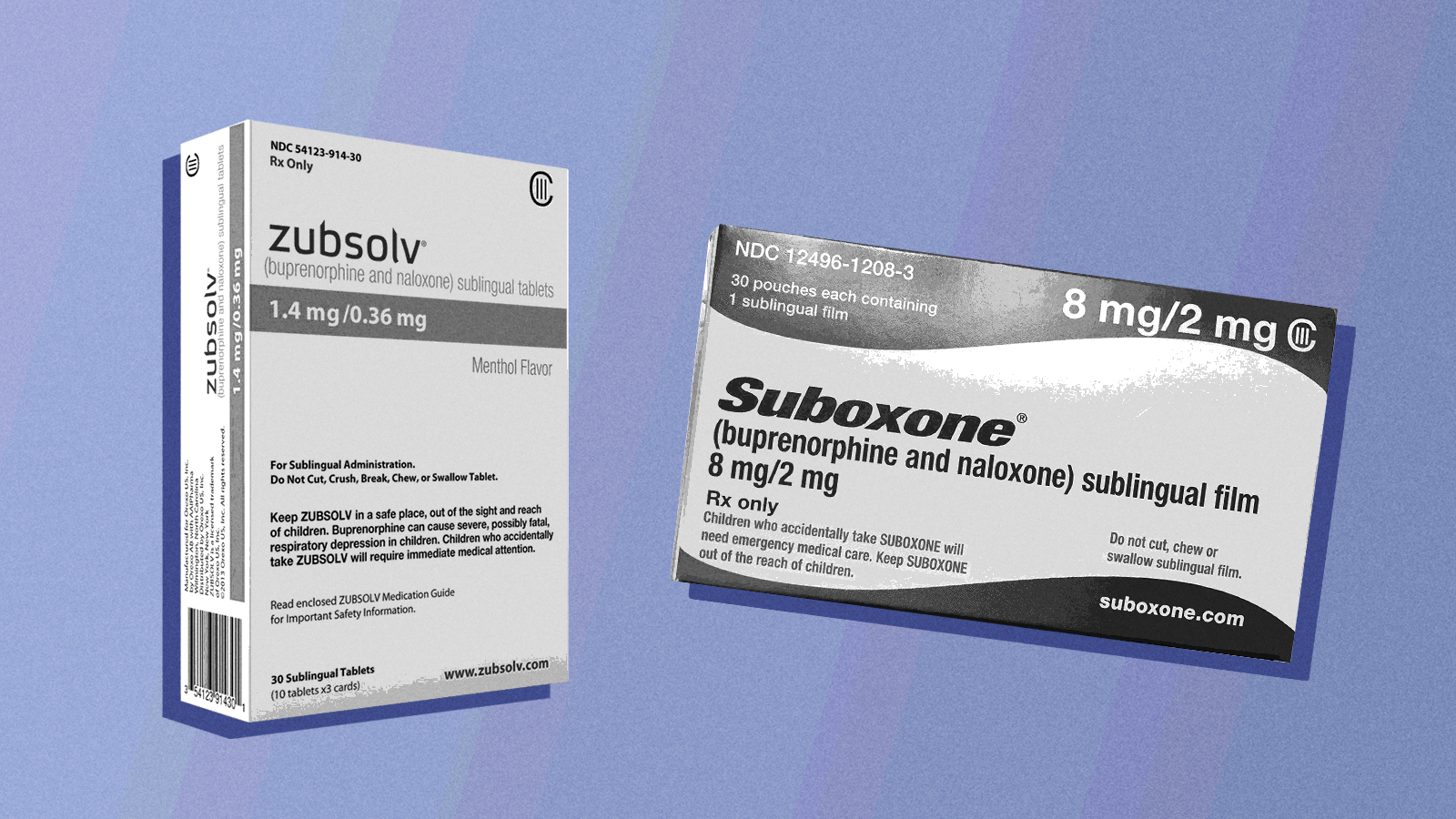

If your care provider has mentioned Zubsolv® and you’ve only heard of Suboxone®—or vice versa—you may be confused about the differences. If your care provider has mentioned Zubsolv® and you’ve only heard of Suboxone®—or vice versa—you may be confused about the differences. Is one medication stronger or more effective than the other? How do providers decide which one is right for the individuals they treat?
Understanding the practical differences between these medications can help you approach your care team (and your treatment) with more confidence. This Zubsolv vs Suboxone breakdown covers key differences in dosing, format, and cost. You’ll also learn what to expect when starting a new treatment or switching from one medication to another.
Zubsolv vs Suboxone: key similarities + differences
Is Zubsolv the same as Suboxone? Not exactly, but they’re more similar than you might realize. Both Zubsolv and Suboxone are brand-name, FDA-approved drugs containing the same active ingredients in the same ratio. They’re both used to help manage opioid dependence and withdrawal symptoms, offering comparable safety and effectiveness.
Both medications work by combining:
- Buprenorphine: This is a partial opioid agonist that activates the same receptors in the brain as opioids to manage cravings and withdrawal symptoms.
- Naloxone: This is an opioid antagonist that blocks the effects of opioids to help deter misuse and abuse.
So, where do the key differences lie? One notable variation is the formulation. Zubsolv is a sublingual tablet that is placed under the tongue, while Suboxone is available as a sublingual tablet or film that is placed under the tongue or in the cheek. Both medications are designed to dissolve in the mouth and absorb through the oral mucosa, delivering active ingredients into the bloodstream without swallowing or injections.
Perhaps the most noticeable difference between the two treatment options is the taste. Zubsolv uses sucralose and menthol to mask the bitterness of the naloxone. This results in a mint-flavored, dye-free tablet. Comparatively, Suboxone is orange-flavored and uses acesulfame K to mask naloxone’s bitterness. Because sucralose is a more potent sweetener than acesulfame K, Zubsolv offers a less bitter aftertaste that many patients prefer.
Another consideration when determining the right medication for you is cost. Zubsolv is a brand-name medication not always covered by insurance. Suboxone’s generic equivalent is widely available, making it more accessible for many patients. It’s also frequently covered under Medicaid.
The final key difference to understand? Dosing strength. Dosing strength differs between the two medications, but a lower milligram dose doesn't mean a weaker medication—it just means your body is able to absorb more of the active ingredients from each dose. Below, we break down the science behind these dosing differences.
Why Zubsolv vs Suboxone doses are different
The dose difference between Zubsolv and Suboxone comes down to one key factor: bioavailability. Bioavailability refers to the rate and fraction of the initial dose that is successfully delivered to the areas of the body where it needs to be to work. Essentially, it measures how efficiently a drug is absorbed and how quickly it becomes available for the body to use.
Zubsolv has a higher bioavailability than Suboxone due to the way its tablet is formulated. This means your body absorbs more medication per milligram, allowing a lower dose of Zubsolv to produce comparable effects to a higher dose of Suboxone.
Because its bioavailability is higher, Zubsolv tablets are smaller and more compact. For example, a smaller 11.4 mg / 2.9 mg Zubsolv tablet delivers a comparable amount of active medication to a larger 16 mg / 4 mg Suboxone dose. This size difference means Zubsolv may be a more comfortable treatment option for people with sensitive teeth, gum irritation, or oral mucosa sensitivity. On the other hand, some patients prefer that Suboxone offers a choice between tablet and film.
The key takeaway regarding dosing is this: both medications are clinically proven to manage withdrawal symptoms and cravings with similar safety and effectiveness. A smaller milligram number does not indicate a weaker medication; it simply reflects differences in formulation and absorption. The ideal medication for you comes down to your personal preferences and your provider’s recommendations.
Dosing equivalencies are approximate. Your care team will determine the right dose for your individual treatment needs.
Why treatment may switch between Zubsolv + Suboxone
Switching between these two medications is not uncommon, and it doesn’t necessarily have to do with how well your treatment is going. Below are some common reasons your clinician may recommend switching.
Insurance coverage and medication cost
When comparing the Zubsolv cost vs Suboxone, the deciding factor is typically your insurance formulary. Also known as a Preferred Drug List (PDL), an insurance formulary is the list of medications a health insurance plan covers. Generic buprenorphine/naloxone (the generic equivalent of Suboxone) is widely available and frequently covered by Medicaid plans. Zubsolv is a brand-name medication, and coverage requirements often vary by plan and state.
If your insurance changes or your plan updates its PDL, your care team may recommend switching medications to reduce your out-of-pocket costs. Learn more about Suboxone costs and what insurance typically covers.
Patient preference and medication experience
Some patients prefer one form of active ingredient delivery over the other. That’s because films and tablets can dissolve differently, have different textures, and taste different. Zubsolv tablets dissolve more quickly and have a menthol-like taste. Suboxone takes longer to dissolve, but it has a more neutral taste. Neither option is better than the other; it just comes down to your preference and which medication is easier for you to take consistently.
Clinical response and treatment stability
If your medication is doing its job—you’re feeling stable, cravings are well-managed, and withdrawals are controlled—then there’s typically no clinical reason to switch. Your provider will help you find the ideal formulation and dose that match your preferences, body composition, and medication sensitivity. If something feels off, talk to your provider. You may need a simple dosage adjustment.
Side effects or administration considerations
If you experience side effects or have difficulty with how a medication tastes or dissolves, bring these concerns to your care team. They may recommend a dosage change or a formulation switch to improve your tolerance.
What to expect if you switch medications
Switching from Zubsolv to Suboxone (or vice versa) does not mean you’re stopping and restarting treatment. It's a formulation change, not a setback. Your provider will calculate equivalent dosing to keep your treatment stable throughout the transition.
When switching medications, most patients experience no major change in how well their cravings and withdrawals are controlled. However, you might notice:
- A difference in how the medication tastes or how long it takes to dissolve
- Subtle change in how quickly you feel the medication working (this is normal and usually resolves within a few days)
- Mild side effects like dry mouth or fatigue that occur as your body adjusts
Remember: a medication switch shouldn’t affect the stability of your treatment when properly managed.
When to contact your care team
Reach out to your provider if you notice any of the following after switching medications:
- Returning cravings that are harder to control
- Withdrawal-like symptoms that don’t resolve in the first few days
- New or worsening side effects
- Difficulty with the new formulation or administration method
Ophelia's care team offers flexible availability to help patients understand what to expect from buprenorphine treatment and stay on track.
Side effects, safety, + effectiveness
Because Zubsolv and Suboxone contain the same active ingredients, Zubsolv’s side effects are very similar to Suboxone’s side effects. While experience on these treatments can vary, some side effects are considered normal (and typically resolve over time or with a dose decrease).
Common side effects for both medications include:
- Headaches
- Issues with falling or staying asleep
- Increased body temperature and sweating
- Nausea, vomiting, and stomach pain
- Constipation
Buprenorphine is generally considered to have a stronger safety profile than other opioid treatments, such as methadone. However, more severe side effects can occur, like breathing problems, allergic reactions, liver issues, or physical dependency. Always contact your care provider if you have questions about side effects or other concerns.
While Zubsolv and Suboxone are considered equally effective for the management of opioid use disorder, every patient responds differently to medication. That’s why it’s important to remain under the care of your clinician throughout the entire course of your treatment.
Common myths about Zubsolv vs Suboxone
Myth #1: Zubsolv is weaker because the dose is smaller
Zubsolv’s dose is smaller because it’s more bioavailable than Suboxone, meaning the body absorbs the medication more efficiently. Zubsolv 5.7 mg delivers a clinically equivalent effect to 8 mg of Suboxone. While the numbers are different, the effect is the same.
Myth #2: Switching medications causes withdrawal
Fact: Switching medications should not trigger withdrawal if your clinician calculates your equivalent dosing and your care team manages the switch. You may experience some mild, temporary symptoms, but these are not the same as going through withdrawal.
Myth #3: One medication works better than the other
Fact: Clinical research does not show a meaningful difference in effectiveness between the two medications. What matters most is determining which dose and administration method work best for your body and finding the pharmacy and insurance coverage that work best for your lifestyle.
Myth #4: Tablets are less effective than films
Fact: Your medication’s delivery method does not determine how well it works. Both sublingual films and tablets are designed to be safe and effective for the treatment of opioid use disorder when properly overseen by a clinician.
Which medication is right for you?
When comparing Suboxone vs Zubsolv, which medication should you choose? There’s no single answer that’s right for everyone. Work with your care team to find the best medication for you—one that’s covered by your insurance, tolerable to take, and effective at managing your symptoms.
Remember: the right medication isn't necessarily the one that looks best on paper. It's the one that works for your body and lifestyle.
Zubsolv vs Suboxone FAQs
How long does it take to adjust after switching medications?
Most patients feel stable within a few days of switching. Rather than adapting to a medication with entirely different ingredients, your body is adjusting to a slightly different dose and delivery format. Contact your care team if your symptoms feel overwhelming or if you’re not feeling settled within a week of switching.
What should I do if my new medication does not control cravings as well?
Contact your provider right away, as this may indicate that the comparable dose needs a minor adjustment. Don’t wait it out. Necessary adjustments are typically small and straightforward.
Can stress or illness affect how Zubsolv or Suboxone works after switching?
Yes, physical and emotional factors like stress and illness can impact the way you experience your medication, regardless of switching. Stress and illness can cause sleep issues, anxiety, gastrointestinal problems, appetite changes, and nausea or vomiting. These factors can make you feel like your new medication isn’t working, even if the levels of buprenorphine and naloxone in your system are unchanged.
If you notice changes in how well your medication is working during a difficult period, reach out to your care team. They can help you figure out the cause and determine whether to adjust your dosage or medication.
What happens if I miss a dose after switching medications?
Missing a dose early into a medication change could increase your chance of experiencing withdrawal-like symptoms. If you miss a dose of Zubsolv or a dose of Suboxone, take it as soon as you remember. If it's close to your next scheduled dose, skip the missed dose and resume your regular schedule.
Never take two doses at the same time unless your clinician has advised you to do so. Don’t hesitate to reach out to your care team if you’re unsure about dosing.
Should I expect changes in sleep, mood, or energy after switching?
Some patients notice mild changes in sleep, mood, or energy after switching medications. These changes usually resolve within a few days as your body adjusts to the new formulation. Contact your provider if these changes are significant or persistent, as you may need a dosage adjustment.
Suboxone treatment with Ophelia
At Ophelia, our licensed clinicians provide evidence-based Suboxone treatment for opioid use disorder through secure telehealth visits. Every patient is matched with a dedicated care team that reviews their clinical needs, goals, and safety considerations to build a customized treatment plan.
Whether you’re considering starting treatment, receiving ongoing care, or considering a medication change, you will receive continued monitoring and support throughout treatment. Because care is fully remote, you can access it on your schedule without waiting rooms, travel, or time off work.
Learn more about how Suboxone treatment with Ophelia helps reduce cravings and manage withdrawal symptoms, or find an online Suboxone provider near you.
Sources


