

How addictive is kratom? What regular users need to know
Kratom is sold online, in smoke shops, and at gas stations across much of the United States. Because it's widely available and marketed as a natural, plant-based supplement, it’s often assumed to be harmless. But just how addictive is kratom?
What many people don’t know is that kratom can cause physical dependence or even develop into a substance use disorder. Not everyone who uses the substance will experience serious problems, but frequent use can change how the body functions and lead to withdrawal symptoms when stopping. If you've noticed you need more kratom than you used to, feel unwell when you miss a dose, or have struggled to stop, these are recognized signs of dependence.
This guide looks at what kratom does within the body and what research says about its addictive potential. It also covers which products carry the highest risk and when it might make sense to reach out to a clinician.
What does kratom actually do within the body?
Kratom comes from the leaves of Mitragyna speciosa, a tree native to Southeast Asia. The plant contains two primary active compounds: mitragynine and 7-hydroxymitragynine (7-OH).
These compounds interact with the same opioid receptors in the brain that are involved in pain relief, mood regulation, dependence, and withdrawal. At lower doses, kratom tends to feel stimulating. At higher doses, kratom produces relaxation, pain relief, and sedation similar to the effects of opioids.
Similar opioid receptor activity doesn't necessarily mean kratom affects people the same way fentanyl, heroin, or other opioids do. But it does help explain why ongoing use can lead to tolerance and physical dependence over time.
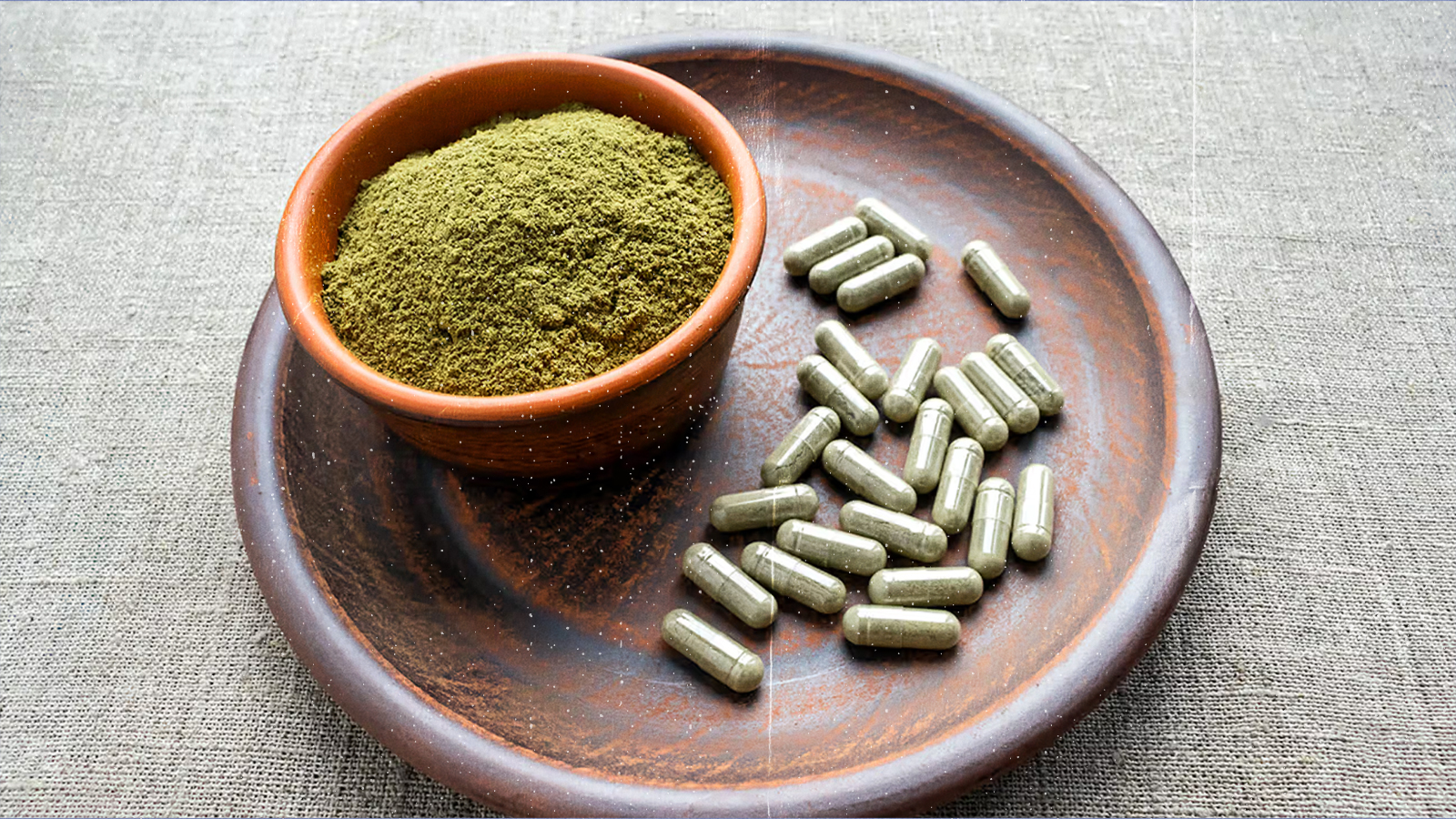
To better understand the substance, it's important to know that "kratom" is often used as an umbrella term for a wide range of products that vary significantly. Traditional whole-leaf kratom generally contains low concentrations of active compounds.
But some products marketed as kratom contain far higher concentrations of active compounds, such as extracts and supplements with concentrated 7-OH. They may even be chemically processed or semi-synthetic, bearing little resemblance to the naturally occurring substance.
This distinction matters because the risk profile of high-potency products is often very different. This can mean stronger effects and a greater likelihood of problematic use or eventual substance use disorder.
Is kratom addictive?
Research shows that kratom can be addictive for some users. However, there’s a difference between physical dependence and addiction, even though these terms are often used interchangeably.
- Physical dependence refers to the biological effects that occur when the body adapts to a substance over time. This leads to withdrawal symptoms upon stopping or limiting use.
- Addiction is the inability to control substance use and resist cravings and urges despite negative consequences.
A person can develop physical dependence without meeting the criteria for a substance use disorder. At the same time, individuals who use kratom regularly can develop patterns of use that meet DSM‑5 criteria for a diagnosable substance use disorder.
Whole-leaf kratom does not carry the same overdose and addiction risk profile as fentanyl or heroin. The reality is that many people use kratom without serious problems, while others become unexpectedly dependent.
Signs that kratom use has become a problem
Dependence can develop over time, but how quickly it happens depends on the product and how it’s used. Concentrated 7-OH products may cause tolerance to develop more quickly, while traditional kratom may lead to slower changes. This is a key reason why it’s not always recognized right away. Someone might start using kratom occasionally and find that it helps with energy, mood, discomfort, or withdrawal symptoms from another substance. Months later, they might realize they feel noticeably worse when they don’t use kratom.
Here are some common signs that kratom use has become problematic:
- Needing larger amounts to get the same effect
- Planning daily activities around use
- Spending significant time thinking about the next dose
- Feeling anxious, irritable, or physically uncomfortable upon missing a dose
- Experiencing strong cravings
- Trying to cut back but being unable to do so
- Continuing to use despite related problems at work, at home, or in relationships
These are clinical signs of how repeated substance use can affect the brain and body over time. They have nothing to do with personal strength or character.
Types of kratom + addictive potential
Different types of kratom products vary in their level of risk.
Whole-leaf kratom
Traditional kratom powder and tea made from whole-leaf kratom generally contain lower concentrations of active alkaloids. While dependence can still occur, many users report a milder pattern of withdrawal compared to highly potent products. That doesn't mean traditional kratom is risk-free. Daily use can still lead to tolerance and trouble stopping, and in some cases, substance use disorder (SUD).
Kratom extracts + concentrates
Extracts and concentrates are different. Extracts may contain significantly higher amounts of active compounds. Because of their higher potency, they can accelerate tolerance and increase the risk of dependence in ways whole-leaf products typically don’t. Withdrawal can sometimes feel more comparable to withdrawal from prescription opioids than from traditional kratom.
Isolated 7-OH products
Remember: kratom leaf and concentrated 7-OH products are not interchangeable. Most 7-OH concentrates, gummies, beverages, and liquid extracts sold in the U.S. today contain chemically processed or semi-synthetic 7-OH that falls into its own category entirely.
Isolated or lab-synthesized 7-OH binds strongly to opioid receptors in a similar way to prescription opioids such as oxycodone and hydrocodone. This leads to much stronger effects that feel closer to those of prescription opioids than traditional kratom. It’s also why withdrawal can feel substantially more intense than withdrawal from whole-leaf kratom.
Many of the more severe dependence concerns Ophelia clinicians are seeing today involve high-potency concentrates rather than traditional leaf-based products. Oftentimes, patients seeking help didn’t fully understand what they were taking.
What makes some people more vulnerable to kratom addiction?
Research points to several factors that increase dependence or addiction risk:
- Chronic pain
- Daily or near-daily use
- Higher doses (especially above 5 grams per day)
- Dose escalation over time
- Months or years of ongoing use
- Use of concentrated extracts or 7-OH products
- History of substance use or opioid use disorder
- Co-occurring mental health conditions
Many people turn to kratom after stopping the use of other opioids. It can feel like a safer alternative, and for some, it functions that way for a while.
But for anyone with a history of opioid use disorder, those same underlying vulnerabilities can make problematic kratom use—and especially problematic 7‑OH use—more likely over time. What starts as self-management can evolve into a new dependence that’s often challenging to address without support. That's one reason many users benefit from clinical guidance.
Can you stop using kratom on your own?
People using lower amounts of traditional kratom for shorter periods may be able to stop using it without much difficulty. Others find stopping kratom much harder than expected, usually due to withdrawal.
Common withdrawal symptoms include:
- Anxiety
- Restlessness
- Sleep problems
- Muscle aches
- Digestive issues
- Cravings
- Irritability
When withdrawal symptoms appear, they may be significant enough to interfere with work, parenting, relationships, and daily responsibilities. That’s one reason people return to kratom or 7-OH, simply to feel functional again.
Clinical guidance isn’t necessary for everyone, but many people find that structured guidance, symptom management (with medication if appropriate), and follow-up make the process easier to navigate.
Support doesn’t automatically mean starting medication. Your licensed clinician will conduct a full evaluation, help you understand your options, and support you in making informed decisions about your health.
When does kratom use warrant clinical support?
There isn't a single threshold that applies to everyone. But it’s worth talking to a clinician if you:
- Have a history of opioid use disorder
- Have been using kratom daily for several weeks or longer
- Are using extracts or high-potency 7-OH products regularly
- Have increased your dose over time
- Have repeatedly tried to stop and returned to use
- Are experiencing withdrawal symptoms that interfere with daily life
- Feel that substance use is affecting your overall function or well-being
Reaching out for an evaluation doesn't lock you into a specific treatment plan. It doesn’t even mean you have to start medication. It simply provides an opportunity for you to understand what's happening in your body and talk through your options with someone experienced in treating substance use disorder.
How Ophelia approaches kratom dependence
Problematic kratom or 7-OH use doesn’t look the same for everyone, and neither does treatment. Structured support and symptom management may be the right approach for people using whole-leaf kratom with relatively mild dependence. But for those using concentrated 7-OH products or individuals with a history of opioid use disorder, medication may be worth discussing.
At Ophelia, we provide evidence-based care for opioid use disorder through telehealth, primarily using buprenorphine/naloxone (Suboxone®) when clinically appropriate. Our clinicians don’t make assumptions or push everyone toward medication. They evaluate what you actually need and create a treatment plan tailored to your history, symptoms, and goals.
We also believe in making care more accessible. Treatment is judgment-free and 100% virtual, so you can get care when and where you need it. Ophelia accepts many insurance plans, including Medicaid and Medicare, in many states. Many insured patients often pay less than $10 per month for clinician visits, prescription management, and ongoing support. Medication coverage depends on your insurance plan.
[Check your insurance coverage: https://my.ophelia.com/insurance-coverage]
[Explore treatment: https://my.ophelia.com/welcome]
Frequently asked questions
Is kratom less addictive than opioids?
Whole-leaf kratom appears to have a lower addiction risk profile than highly potent opioids like fentanyl or heroin. However, lower risk isn't the same as no risk. Regular kratom use can still lead to dependence and even substance use disorder for some people.
How long does it take to become dependent on kratom?
Research suggests that the likelihood of experiencing withdrawal symptoms is generally higher among those who use kratom heavily or over extended periods. However, there’s no specific number of days, weeks, or months after which dependence occurs.
Can you become addicted to kratom if you're using it to manage pain?
Yes. The reason someone starts using kratom doesn't change the body's response to the substance. Individuals who begin using kratom for pain relief can still develop tolerance, withdrawal symptoms, and patterns of use that become harder to control over time.
What's the difference between kratom dependence + kratom addiction?
Dependence means the body has adapted to a substance, and withdrawal symptoms appear once a person stops using it. Addiction involves difficulty controlling use due to strong cravings and urges as well as continued use despite negative consequences. A person can become physically dependent on kratom without meeting the criteria for substance use disorder, although the two may overlap.
Sources
- Alsbrook, S., Pro, G., & Koturbash, I. (2025, November 3). From kratom to 7-hydroxymitragynine: evolution of a natural remedy into a public-health threat. Pharmaceutical Biology, 63(1), 896–911. Retrieved June 11, 2026, from https://pmc.ncbi.nlm.nih.gov/articles/PMC12671409/
- National Institute on Drug Abuse. (2026, March). Kratom. Retrieved June 9, 2026, from https://nida.nih.gov/research-topics/kratom
- Reed, S. (2025, November 24). Addiction vs. dependence. Addiction Center. Retrieved June 9, 2026, from https://www.addictioncenter.com/addiction/addiction-vs-dependence/
- Singh, D., Müller, C. P., & Vicknasingam, B. K. (2014, June 1). Kratom (Mitragyna speciosa) dependence, withdrawal symptoms, and craving in regular users. Drug and Alcohol Dependence, 139, 132–137. Retrieved June 9, 2026, from https://www.sciencedirect.com/science/article/abs/pii/S0376871614007935
- Grundmann, O., Garcia-Romeu, A., McCurdy, C. R., Sharma, A., Smith, K. E., Swogger, M. T., & Weiss, S. T. (2024, January). Not all kratom is equal: The important distinction between native leaf and extract products. Addiction, 119(1), 202–203. Retrieved June 9, 2026, from https://onlinelibrary.wiley.com/doi/10.1111/add.16366
- Alsbrook, S., Pro, G., & Koturbash, I. (2025, November 3). From kratom to 7-hydroxymitragynine: evolution of a natural remedy into a public-health threat. Pharmaceutical Biology, 63(1), 896–911. Retrieved June 9, 2026, from https://pmc.ncbi.nlm.nih.gov/articles/PMC12671409/
- Rogers, J. M., Weiss, S. T., Epstein, D. H., Grundmann, O., Hill, K., & Smith, K. E. (2024, May 20). Kratom addiction per DSM-5 SUD criteria, and kratom physical dependence: Insights from dosing amount versus frequency. Drug and Alcohol Dependence, 260, 111329. Retrieved June 9, 2026, from https://pmc.ncbi.nlm.nih.gov/articles/PMC11493341/
- Rodriguez, T. (2023, April 28). Kratom use in the US: What clinicians should know. Psychiatry Advisor. Retrieved June 9, 2026, from https://www.psychiatryadvisor.com/features/kratom-use-us-what-clinicians-should-know/
- Crane, M. (2026, March 30). Kratom withdrawal symptoms, timeline & detox treatment. American Addiction Centers. Retrieved June 9, 2026, from https://americanaddictioncenters.org/kratom/withdrawal
- Singh, D., Müller, C. P., & Vicknasingam, B. K. (2014, June). Kratom (Mitragyna speciosa) dependence, withdrawal symptoms, and craving in regular users. Drug and Alcohol Dependence, 139, 132–137. Retrieved June 10, 2026, from https://pubmed.ncbi.nlm.nih.gov/24698080/


