
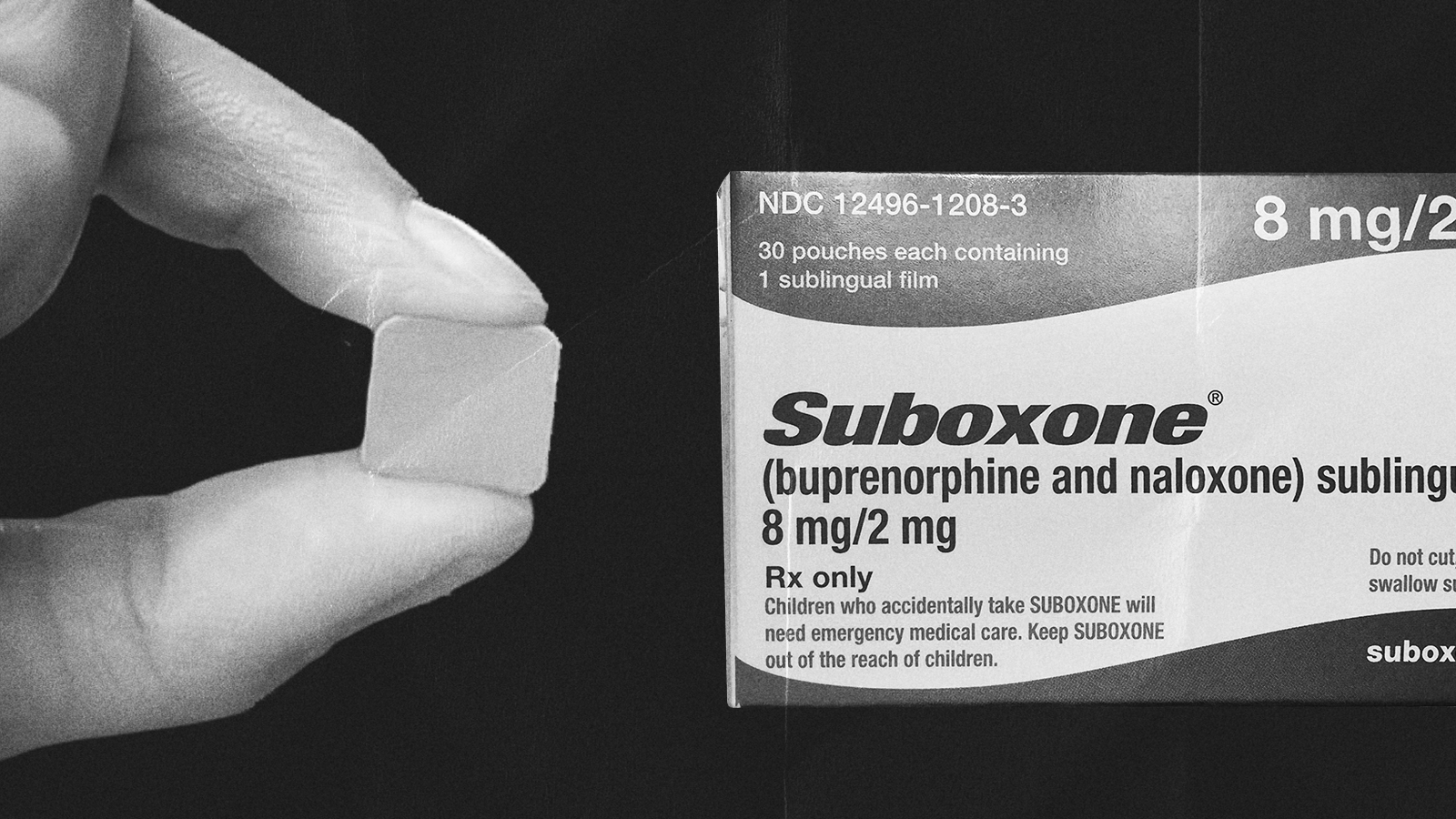

If you're just starting to compare Belbuca vs Suboxone, you might be wondering how they're different. Both medications include buprenorphine, so it’s easy to assume they treat the same conditions and work the same way. But Belbuca and Suboxone are not interchangeable.
Belbuca is FDA-approved to treat chronic pain in patients requiring continuous symptom management. Suboxone is FDA-approved to treat opioid use disorder (OUD). Despite a shared active ingredient, differences in formulation, dosing, delivery method, and the presence of naloxone in Suboxone shape how each medication works and is prescribed. This guide compares Belbuca vs Suboxone so you can have a more informed conversation with your clinician about which treatment option is the best fit for your needs and life.
Belbuca vs Suboxone: quick comparison
Both treatment options are built around buprenorphine, but that’s largely where the similarities end.
What is Belbuca?
Belbuca is a buprenorphine film that’s approved to treat severe chronic pain.
It’s clinically indicated when:
- Pain is so intense that it requires long-term, around-the-clock opioid treatment
- Alternative treatment options are insufficient
As a partial opioid agonist, Belbuca binds to the same receptors as other opioids but has a lower risk of misuse and dependence. Unlike Suboxone, it does not contain naloxone and is not approved or intended to treat OUD.
How Belbuca is taken
Belbuca is a buccal film that’s applied inside the cheek and left to dissolve. This allows the body to absorb the buprenorphine directly into the bloodstream. It comes in seven strengths ranging from 75-900 mcg so clinicians can adjust the dose gradually as needed. The 600 mcg, 750 mcg, and 900 mcg strengths are used only after a patient has safely reached a higher dose.
Common side effects of Belbuca
Belbuca shares many common side effects with Suboxone due to the buprenorphine component in both, such as:
- Nausea or vomiting
- Constipation
- Dizziness
- Headache
Other possible side effects include sleepiness and mouth irritation or ulcers within the cheek. Your clinician can adjust your dose or medication if you have concerns or experience unexpected side effects.
What is Suboxone?
Suboxone is a brand-name medication that’s approved to treat opioid dependence. It works by combining buprenorphine, a partial opioid agonist, with naloxone, an opioid antagonist.
Suboxone’s buprenorphine component partially activates opioid receptors to reduce cravings and ease withdrawal symptoms. At the therapeutic doses used in OUD treatment, it doesn’t produce the strong euphoric effects associated with full agonists like heroin or fentanyl. Buprenorphine has a ceiling effect on respiratory depression, which lowers overdose risk compared to full opioid agonists.
The other component of Suboxone is naloxone, which works by blocking the effects of opioids. Naloxone is included to deter misuse. It’s inactive when taken orally and triggers withdrawal if injected.
How Suboxone is taken
Suboxone is formulated as a daily sublingual tablet or film that dissolves under the tongue. It comes in four strengths ranging from 2-12 mg. Clinicians can adjust doses over time as patients enter new phases of treatment.
Common side effects of Suboxone
In addition to the side effects that Suboxone and Belbuca have in common — nausea or vomiting, constipation, dizziness, and headache — people taking Suboxone may experience:
- Higher body temperature and sweating
- Trouble falling or staying asleep
- Physical dependence
- Tongue irritation or numbness
More serious side effects, like allergic reactions or liver problems, are rare. Reach out to your care team if you have concerns about symptoms or think you need a dose adjustment.
Key differences between Belbuca and Suboxone
While both medications share buprenorphine as their active ingredient, they are not interchangeable due to differences in formulation, dosing, and delivery method. Here are the key differences to understand when comparing Belbuca vs Suboxone.
Can Belbuca treat opioid use disorder?
Belbuca is not approved to treat opioid use disorder. Suboxone is considered a first-line treatment for OUD.
Approved uses and clinical purpose
Belbuca is approved for pain management and intended to treat severe, chronic pain that requires continuous opioid support. It’s recommended when alternative treatment options fail to provide sufficient long-term pain management.
Suboxone is approved and intended for opioid addiction treatment. It’s effective for reducing opioid cravings and withdrawal symptoms.
Formulation and delivery method
Belbuca is a buccal film placed inside the cheek. Suboxone comes in a sublingual tablet or film that’s placed under the tongue. Both delivery methods allow buprenorphine to be absorbed through the lining of your mouth.
Dosing units and dose strengths
When comparing Belbuca vs Suboxone, it’s important to understand how dosing units and strengths vary. Belbuca is dosed in micrograms (mcg) across seven strengths that allow for gradual dose increases as needed for pain.
Belbuca dosing strengths include:
- 75 mcg
- 150 mcg
- 300 mcg
- 450 mcg
- 600 mcg
- 750 mcg
- 900 mcg
Suboxone is dosed in milligrams (mg) across four strengths that can be adjusted by treatment phase.
Suboxone dosing strengths include:
- 2 mg buprenorphine + 0.5 mg naloxone
- 4 mg buprenorphine + 1 mg naloxone
- 8 mg buprenorphine + 2 mg naloxone
- 12 mg buprenorphine + 3 mg naloxone
The difference in units reflects the difference in purpose. Pain management often calls for smaller, more incremental dose adjustments, while OUD treatment is typically dosed to reach and maintain a stable, effective level.
Naloxone and misuse risk
Suboxone includes naloxone to deter misuse. This is an opioid antagonist that’s inactive when taken orally but triggers withdrawal if injected. Belbuca does not contain naloxone, so it doesn’t offer the same misuse protection.
Cost and insurance coverage
Most major insurance plans offer some coverage for both prescriptions, but specific details and prior authorization requirements depend on the insurance plan and state. Belbuca and Suboxone’s generic equivalent are widely covered by Medicaid. However, Medicaid coverage for brand-name Suboxone varies by state and is often provided only when a generic alternative is unavailable.
Many people with commercial insurance pay a monthly copay for medication coverage, which typically ranges from $0-$100. Prescriptions are usually free or low‑cost for people on Medicaid, with copays that often range from $1-$5.
Which medication is right for you?
The decision of Belbuca vs Suboxone comes down to your specific circumstances. A clinician experienced in medication-assisted treatment (MAT) can help you determine which option best fits your situation.
Factors that point to Suboxone
Suboxone may be a better fit if you:
- Are experiencing active OUD or opioid withdrawal symptoms
- Have a history of opioid misuse, as naloxone provides an additional safety layer
- Prefer a daily treatment option you can take from home and manage via telehealth
- Are pregnant, as buprenorphine-based medications are preferred over alternatives like methadone for treating OUD in pregnancy
Factors that point to Belbuca
Belbuca may be a better fit if you:
- Have diagnosed severe chronic pain that requires around-the-clock pain management using opioids
- Are not experiencing active OUD, as clinicians assess misuse history carefully before prescribing Belbuca
Patients managing both pain and Suboxone treatment should talk to their clinician about which treatment aligns with their needs and goals.
Common myths about Suboxone vs Belbuca
Here are some of the most common myths you may have heard when comparing Suboxone vs Belbuca.
Myth: Suboxone and Belbuca are the same medication.
Fact: Buprenorphine is the active ingredient in both Suboxone and Belbuca, but the two are not interchangeable. Belbuca is a buccal film used to treat chronic pain. Suboxone is a sublingual tablet or film that includes naloxone and is used in OUD management. The medications differ in formulation, dosing, delivery method, and intended use.
Myth: If Belbuca contains buprenorphine, it can treat OUD.
Fact: Belbuca’s formulation and dosing are built around pain management, and its only FDA approval is for treatment of chronic, severe pain. While its active ingredient is the same as Suboxone’s, it’s not standard treatment for OUD.
Myth: Suboxone is just trading one addiction for another.
Fact: Suboxone is prescribed and monitored by a clinician as treatment for OUD, a legitimate medical condition. Taking medication as prescribed is not the same as compulsive opioid use.
Myth: Suboxone gets you high.
Fact: Most people who are prescribed Suboxone for OUD describe feeling stable and clear-headed rather than high. At therapeutic doses, the partial activation and ceiling effect of buprenorphine limit Suboxone’s euphoric effects.
Myth: Belbuca is safer because it doesn't contain naloxone.
Fact: The absence of naloxone doesn’t make Belbuca safer than Suboxone. It means Belbuca lacks the built-in safeguard that reduces misuse with Suboxone — a key reason why Suboxone has a lower overdose risk when taken as prescribed. This is why healthcare providers are cautious about prescribing Belbuca to patients with a history of opioid misuse.
Suboxone treatment with Ophelia
Ophelia provides evidence-based OUD treatment through telehealth, primarily using Suboxone (buprenorphine/naloxone). Eligible patients can often meet with a clinician experienced in OUD care within one to three days of completing an online intake.
Treatment is entirely virtual. Prescriptions are sent to your local pharmacy, and you'll work with a dedicated care team throughout treatment. You can access support seven days a week through Ophelia's care coordination and triage nursing team, with on-call medication support for significant issues.
Ophelia accepts Medicaid, Medicare, and most commercial insurance plans. Many insured patients pay less than $10 per month for treatment, though medication costs are separate and based on prescription coverage. Care through Ophelia is judgment-free, with ongoing support from a dedicated care team throughout each stage of treatment.
[Check your insurance coverage: https://my.ophelia.com/insurance-coverage]
[Explore treatment: https://my.ophelia.com/welcome]
Frequently asked questions
Can I switch from Belbuca to Suboxone if I develop opioid use disorder?
Yes, but only under the guidance of your clinician. Your care team will evaluate your situation and determine the safest way to transition from one medication to another.
How do I find a Suboxone provider?
Start by looking for a clinician licensed to prescribe buprenorphine-based medications like Suboxone. Not every prescriber who can write a Suboxone prescription specializes in opioid use disorder, so it's worth confirming the provider has specific OUD treatment experience. Telehealth options like Ophelia connect patients with a dedicated care team of clinicians experienced in OUD care, and eligible patients can often be seen within one to three days.
Does Suboxone cause withdrawal symptoms when you stop taking it?
Possibly, since your body adapts to the medication over time. That’s why it’s important to stop using a medication like Suboxone under medical supervision. To prevent withdrawal symptoms, your clinician can gradually taper the dose.
Can I take Suboxone if I'm currently prescribed Belbuca for chronic pain?
In many cases, no. Suboxone and Belbuca work differently and have different safety considerations, so you may need to adjust or discontinue using Belbuca to safely transition to Suboxone. If your pain management plan is no longer working or you feel like you need a different medication, your provider can help.
Does Suboxone help with pain as well as OUD?
The buprenorphine component of Suboxone has effective pain-relieving properties. However, Suboxone is designed and approved to treat OUD rather than chronic pain. People managing both conditions should talk to their clinician about the right approach.
How long do people typically stay on Suboxone treatment?
Some people stay on Suboxone for a few months. Others use Suboxone to manage OUD for several years or indefinitely. Your care team will make this decision in collaboration with you based on your treatment goals and stability.
Why is Belbuca dosed in micrograms while Suboxone is dosed in milligrams?
Suboxone vs Belbuca dosing reflects how each medication is used in treatment. Belbuca's microgram dosing allows for fine adjustments as pain levels change. Suboxone’s milligram dosing helps people reach and maintain a steady level that supports effective OUD treatment.
Sources
- U.S. Food and Drug Administration. (2015, October). BELBUCA (buprenorphine) buccal film, CIII: Prescribing information. Endo Pharmaceuticals, Inc. Retrieved July 23, 2026, from https://www.accessdata.fda.gov/drugsatfda_docs/label/2015/207932s000lbl.pdf
- Collegium Pharmaceutical, Inc. (2026). Why BELBUCA? BELBUCA®. Retrieved July 23, 2026, from https://www.belbuca.com/why-belbuca/
- U.S. Food and Drug Administration. (2021, March). SUBOXONE (buprenorphine and naloxone) sublingual film, CIII: Prescribing information. Indivior, Inc. Retrieved July 23, 2026, from https://www.accessdata.fda.gov/drugsatfda_docs/label/2021/022410s042lbl.pdf
- Pergolizzi, J., Aloisi, A. M., Dahan, A., Filitz, J., Langford, R., Likar, R., Mercadante, S., Morlion, B., Raffa, R. B., Sabatowski, R., Sacerdote, P., Torres, L. M., & Weinbroum, A. A. (2010). Current knowledge of buprenorphine and its unique pharmacological profile. Pain Practice: The Official Journal of the World Institute of Pain, 10(5), 428–450. Retrieved July 23, 2026, from https://pubmed.ncbi.nlm.nih.gov/20492579/
- Recovery Research Institute. (n.d.). New…and improved? The latest studies on injectable buprenorphine for opioid use disorder. Retrieved July 23, 2026, from https://www.recoveryanswers.org/research-post/monthly-injectable-buprenorphine/
- Collegium Pharmaceutical, Inc. (2026). Dosing & titration guide for HCPs. BELBUCA®. Retrieved July 23, 2026, from https://www.belbuca.com/hcp/dosing-titration/
- Lovely, A. (2025, Oct 6). Does Medicaid cover prescriptions? Propel. Retrieved July 23, 2026, from https://www.propel.app/blog/does-medicaid-cover-prescriptions/
- Sanford, B., Espinoza, A., & Eniola, K. (2025). Buprenorphine: A better option for opioid use disorder treatment in pregnancy compared to methadone. Journal of the American Board of Family Medicine: JABFM, 38(1), 188–191. Retrieved July 23, 2026, from https://pmc.ncbi.nlm.nih.gov/articles/PMC12096386/
- Dalal, S., Chitneni, A., Berger, A. A., Orhurhu, V., Dar, B., Kramer, B., Nguyen, A., Pruit, J., Halsted, C., Kaye, A. D., & Hasoon, J. (2021). Buprenorphine for chronic pain: A safer alternative to traditional opioids. Health psychology research, 9(1), 27241. Retrieved July 23, 2026, from https://pmc.ncbi.nlm.nih.gov/articles/PMC8567798/


