
If you’re comparing Vivitrol vs Suboxone for opioid use disorder (OUD), you’re weighing an important treatment decision. Maybe you’re preparing to leave a detox program or considering a change in your current treatment plan. Unfortunately, online opinions often conflict and make it hard to know which recommendations are supported by evidence.
Both Vivitrol and Suboxone are FDA-approved for OUD, and both help patients manage OUD as part of a comprehensive treatment plan. But the two medications work in fundamentally different ways. Which is right for you depends on a combination of personal factors, from your current opioid use to your treatment goals.
The Vivitrol vs Suboxone comparison below will help you understand how each medication works. Learn how treatment starts, what evidence shows about effectiveness, which side effects you might experience, and when a particular medication might be a better fit.
What is Suboxone?
Suboxone has been FDA-approved for OUD since 2002. The medication combines buprenorphine, a partial opioid agonist, with naloxone, an opioid antagonist, to ease opioid cravings and withdrawal symptoms.
Suboxone’s buprenorphine component works by partially activating opioid receptors without producing the strong euphoric effects of full opioid agonists like heroin or fentanyl. Buprenorphine’s ceiling effect on respiratory depression helps explain its lower overdose risk.
Naloxone, the other component of Suboxone, blocks the effects of opioids by competing with them for the same receptors. Naloxone is included in Suboxone to deter misuse. When taken orally as prescribed, it’s inactive, but it triggers an unpleasant state of withdrawal if injected.
Suboxone is available as a sublingual film or tablet that dissolves under the tongue. It’s taken up to four times daily, depending on your current stage of treatment and prescription. A generic combination of buprenorphine and naloxone exists for patients whose insurance does not cover the brand-name medication. Your clinician will recommend the right starting dose based on a combination of factors and adjust your dose as needed throughout Suboxone treatment.
What is Vivitrol?
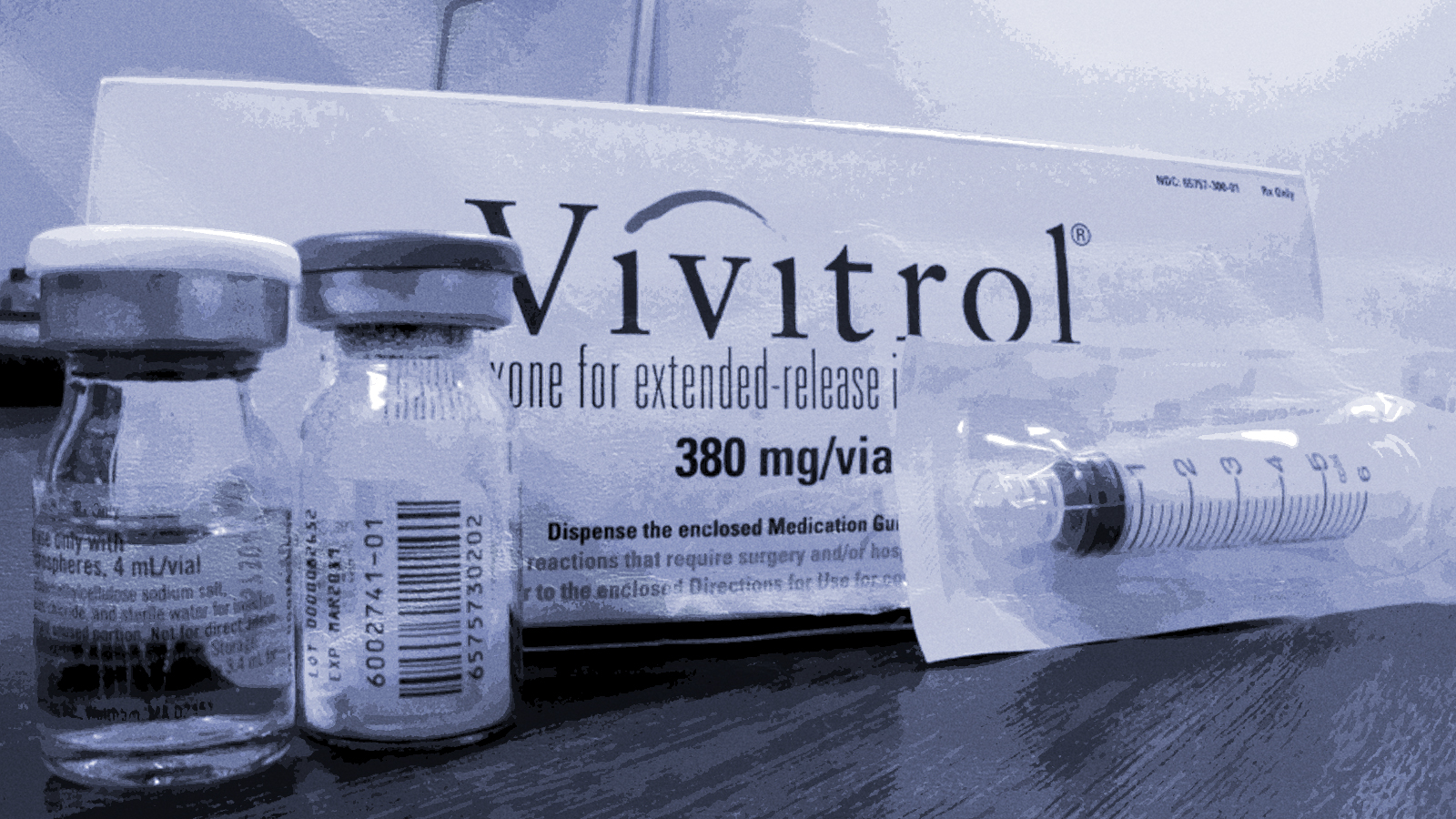
Vivitrol is the brand name for extended-release naltrexone, a Suboxone alternative that’s been FDA-approved for OUD since 2010. Vivitrol’s active ingredient is naltrexone, an opioid antagonist that blocks opioid receptors. This mechanism prevents opioids from producing their usual rewarding effects that often lead to continued opioid use. Vivitrol also contains no buprenorphine or other opioid content, so the medication itself does not cause physical dependence.
However, Vivitrol doesn’t treat withdrawal since it must be started after an opioid-free period. Additionally, the injection cannot be self-administered. Instead, it’s given by a healthcare provider approximately every four weeks. This in-person requirement can be inconvenient for some patients, while others prefer the injection because it removes the need for daily dosing.
Vivitrol is FDA-approved to treat alcohol use disorder (AUD) as well as OUD. This may be beneficial for people who are receiving treatment for both conditions.
How Suboxone + Vivitrol work differently
Suboxone and Vivitrol affect opioid receptors in opposite ways. Suboxone partially activates opioid receptors to ease withdrawal and cravings, while Vivitrol blocks them and requires a full opioid-free period first.
The medications also differ in what happens if opioids are used during treatment and whether stopping requires a clinician-guided taper. Understanding these differences makes it easier to see which might be the better fit.
Vivitrol vs Suboxone: Key differences at a glance
This quick comparison highlights key differences in ingredients, starting treatment, withdrawal management, and more.
Looking at these differences side by side makes it easier to understand which medication may align best with your needs and circumstances. If you’re weighing other OUD medications too, see how Suboxone compares to methadone and to Zubsolv.
Starting treatment: What each medication requires
When comparing Suboxone vs Vivitrol, a key deciding factor is what it takes to get started. Understanding timing and preparation requirements can help you better understand your options.
Starting Suboxone
You can typically start Suboxone once you’ve felt the first signs of opioid withdrawal, without completing a full detox first. This generally happens 12 to 24 hours after stopping short-acting opioids or 36 hours after stopping long-acting opioids. This period may extend to 48 hours or more after stopping methadone.
Buprenorphine induction does not require an inpatient stay. Ophelia enables patients to begin Suboxone with the support of a telehealth clinician who specializes in OUD treatment. Your clinician will guide you in starting the medication at the right time to avoid precipitated withdrawal, a sudden and severe onset of withdrawal symptoms. Your clinician may also prescribe comfort medications to ease symptoms like nausea, anxiety, and trouble sleeping.
Starting Vivitrol
Vivitrol requires you to complete an opioid-free period before your first dose. That’s because antagonists like naltrexone rapidly displace opioids from their receptors, which can trigger precipitated withdrawal when opioids are still present in the body. A qualified clinician can help you start Vivitrol at the right time to reduce risk.
Generally, patients starting naltrexone can receive their first injection 7-10 days after stopping short-acting opioids. The waiting period may be closer to 10- 14 days after stopping long-acting opioids, or when transitioning to Vivitrol from methadone or buprenorphine. Getting through this opioid‑free period can be challenging, but support is available for this course of treatment.
Before your first dose, your clinician may use urine testing and perform a naloxone challenge to make sure your body is clear of opioids and that you’re ready for treatment.
Suboxone vs Vivitrol effectiveness: what the research shows
When comparing Suboxone vs Vivitrol effectiveness, the most useful questions are how well each medication works once treatment begins and how difficult each is to start. The answers have been studied directly in a randomized, head-to-head clinical trial.
The X:BOT trial and other research
The strongest evidence comes from the 2017 X:BOT trial, a randomized controlled study published in The Lancet. Researchers followed 570 adults with OUD who were assigned to receive either Suboxone or Vivitrol.
The clearest difference between the two medications emerged before treatment even began: Suboxone was easier for more people to start since it can be taken as soon as withdrawal begins. Ninety-four percent of participants successfully began Suboxone, compared to 72% who successfully began Vivitrol. This difference was largely due to Vivitrol’s requirement for an opioid-free period before starting treatment.
What happened after treatment began?
Among participants who successfully began treatment, the medications showed similar effectiveness in preventing opioid relapse. This outcome suggests that treatment initiation was an important difference between the two medications, despite their effectiveness being similar among participants who successfully started treatment.
A separate randomized trial published in JAMA Psychiatry reached a similar conclusion. Among participants who successfully began either Vivitrol or Suboxone, both medications helped them stay off opioids at similar rates.
What this means for OUD treatment
This evidence suggests that Suboxone has an advantage for people starting treatment from active opioid use because they don’t have to get through the withdrawal period without medication relief. For people who have already completed detoxification and are opioid-free, both medications are evidence-based treatments worth considering, and the Vivitrol vs Suboxone decision comes down to circumstances and treatment preferences.
Side effects + safety
Both Suboxone and Vivitrol have well-established safety profiles, but they come with different side effects and precautions. Understanding these can help you be more informed when discussing options with your care team.
Suboxone side effects
Suboxone is a first-line treatment for OUD, and side effects typically ease as your body adjusts to treatment.
Common, mild side effects include:
- Headaches
- Trouble falling or staying asleep
- Increased body temperature and sweating
- Nausea or vomiting
- Constipation
- May also cause hormonal and sexual side effects
More severe side effects, like allergic reactions or liver problems, are rarer but can occur. The FDA warns that dental problems such as cavities, oral infections, and tooth decay can occur from sublingual buprenorphine. However, they state that the benefits of buprenorphine-based medicines for OUD clearly outweigh the risks.
People using Suboxone should avoid drinking alcohol and using benzodiazepines and other sedatives, as combining these substances can increase the risk of coma, overdose, or death. Suboxone can also cause physical dependence, meaning stopping it suddenly can lead to withdrawal. Your clinician can help you manage unpleasant side effects, adjust your dose, and taper the medication if and when you’re ready to stop.
Vivitrol side effects
Vivitrol can cause mild injection-site reactions such as pain, redness, bruising, or swelling. Serious injection-site reactions are rare.
Other common side effects of naltrexone include:
- Reduced energy levels
- Anxiety and nervousness
- Muscle and joint pain
- Headaches
- Nausea or upset stomach
- Trouble sleeping
Less common side effects like loss of appetite, excessive thirst, skin rash, constipation or diarrhea, and sadness or irritability occur in fewer than 10% of reported cases. Your clinician will monitor your reaction as well as any mood changes you experience. They can adjust your treatment plan if needed.
Safety considerations for both
Suboxone has a long, established evidence base for reducing relapse risk in patients managing OUD. Its buprenorphine component has a ceiling effect on respiratory depression, lowering overdose risk compared to full opioid agonists. However, it doesn’t eliminate overdose risk completely. Combining Suboxone with alcohol or benzodiazepines can cause life-threatening breathing problems.
Vivitrol is effective for people who are already opioid-free, but missing a dose limits its opioid-blocking protection and increases relapse risk. Overdose risk is more likely if someone returns to using opioids after stopping Vivitrol due to decreased tolerance. Keeping naloxone on hand can provide an extra layer of protection in case of accidental overdose.
Both medications can complicate opioid-based pain management. Vivitrol blocks the effects of opioid pain medications, and Suboxone may require adjustments to standard pain treatment due to buprenorphine's long-lasting attachment to the body's opioid receptors. That’s why it’s important to tell every healthcare provider treating you that you're taking (or have recently taken) either medication.
Suboxone and Vivitrol shouldn’t be used together. Because naltrexone blocks opioid receptors, it can interfere with buprenorphine’s effects. It may also cause precipitated withdrawal if opioids are still present in your system.
Vivitrol vs Suboxone: Cost + insurance coverage
When comparing Vivitrol vs Suboxone costs, your insurance plan, medication and formulation, and where you live determine how much you’ll pay and whether prior authorization is required. Commercial insurance, Medicaid, and Medicare Part D offer some coverage for Suboxone, Vivitrol, and oral naltrexone.
Many insured patients pay a low monthly copay for Suboxone, depending on insurance. For those on Medicaid, Suboxone is typically low-cost (sometimes $0) depending on your plan. Suboxone’s manufacturer offers an INSUPPORT® Copay Assistance Program to help reduce costs for people with private insurance. For patients without insurance, generic buprenorphine/naloxone is widely available and often reduces costs. Coupon programs like GoodRx can help you further reduce your out-of-pocket expenses.
As a brand-only injection requiring monthly administration by a healthcare professional, Vivitrol can be far more expensive. However, 90% of eligible Vivitrol patients with any insurance plan pay less than $5 out of pocket through the VIVITROL Co-pay Savings Program; 99% of people with Medicaid pay $4 or less each month. Uninsured individuals can consider daily generic tablets for a lower cost.
Check your insurance coverage
Switching between Vivitrol + Suboxone
Switching between Suboxone and Vivitrol is possible, but the process depends on which medication you're currently taking. Your clinician will help you transition safely while reducing the risk of withdrawal or relapse.
Switching from Suboxone to Vivitrol
Switching from Suboxone to Vivitrol usually starts with a clinician-guided taper. You can only start Vivitrol once you’re opioid-free, so you’ll need to follow your clinician’s guidelines before your first injection. This detox period is typically 7-10 days or more.
Never try to manage this transition on your own. Your care team will help determine the right timing and support you through each step.
Switching from Vivitrol to Suboxone
Because naltrexone does not have a risk of dependence, switching from Vivitrol to Suboxone does not require tapering off naltrexone. However, timing still matters. Your clinician will determine the ideal time to begin Suboxone once Vivitrol’s blocking effects have worn off and offer guidance throughout each phase.
Common myths about Vivitrol vs Suboxone
There is conflicting information about OUD medications online. Here are a few common myths about Vivitrol vs Suboxone — and what the evidence shows.
Myth: Suboxone just trades one addiction for another.
Fact: Suboxone is prescribed and monitored by a clinician as treatment for OUD, a legitimate medical condition. While Suboxone can cause physical dependence, this is not the same as compulsive opioid use. Suboxone that’s taken as prescribed helps reduce cravings and withdrawal to support treatment.
Myth: Vivitrol is the "better" choice because it contains no opioids.
Fact: While it’s true that naltrexone doesn't create physical dependence, neither Vivitrol nor Suboxone is universally “better” because the medications work in different ways. Your clinician can help you determine which option fits your medical history and treatment goals.
Myth: If the medication works, you should stop taking it quickly.
Fact: There isn't a standard timeline for treatment. Many people benefit from staying on medication for months or years. If you want to stop treatment, talk with your clinician about the safest way to do so and whether a taper is appropriate.
Myth: You can't overdose while on either medication.
Fact: Neither medication eliminates overdose risk. Research shows that buprenorphine may provide some risk mitigation against full agonist opioid overdose, but data is limited, and overdose can still occur. Naltrexone presents increased overdose risk if someone returns to using opioids after stopping treatment, as previously tolerated doses can become more dangerous.
Which medication is right for you?
When comparing Vivitrol vs. Suboxone, remember that neither is universally better. The right choice is the option that fits your goals and where you are in the process.
An honest conversation with your clinician helps them weigh the tradeoffs and recommend the better fit.
Vivitrol vs Suboxone FAQs
Is Suboxone or Vivitrol more effective for treating opioid use disorder?
Both medications are FDA-approved and effective for OUD. In head-to-head research, more patients successfully started Suboxone than Vivitrol. However, the two were similarly effective at preventing relapse once treatment began. A clinician can help you weigh that against your current stage of treatment and preferences.
Which medication is better for opioid addiction if I'm still using opioids?
Suboxone is often easier to start since you can take the first dose as soon as withdrawal begins. Vivitrol requires complete detoxification before starting, which means waiting until opioids are fully out of the body. A clinician will guide the timing of your induction to keep the process safe.
Can you take Suboxone + Vivitrol at the same time?
Using Suboxone and Vivitrol together is not recommended. Suboxone contains buprenorphine, a partial opioid agonist, while Vivitrol is naltrexone, an opioid antagonist. Taking them at the same time would block Suboxone’s effects, making the medication less effective. It could also trigger a sudden and severe onset of withdrawal symptoms.
Do you have to detox before starting Vivitrol or Suboxone?
It depends on the medication. You must complete the required opioid-free period of 7-10 days or more before starting Vivitrol. Suboxone does not require a full detox and can be started as soon as withdrawal symptoms begin.
Does insurance cover Suboxone or Vivitrol?
Most insurance plans offer some coverage for both, including Medicaid in many states. However, coverage details and out-of-pocket costs can vary by plan, state, whether you’re prescribed a brand name or generic, and how that medication is formulated. Ophelia helps patients understand their benefits and confirm what their plan covers before starting telehealth treatment.
How does Sublocade compare to Vivitrol?
Sublocade and Vivitrol are both monthly injections for OUD, but they work differently. Sublocade delivers extended-release buprenorphine, a partial opioid agonist that relieves withdrawal and cravings. Vivitrol delivers naltrexone, an opioid antagonist that blocks opioid effects and requires a full opioid-free period before the first dose. A clinician can help you compare Sublocade and Vivitrol alongside Suboxone to find the best fit.
Suboxone treatment with Ophelia
For most eligible patients, including those starting treatment from active opioid use, Ophelia provides buprenorphine-based treatment primarily using Suboxone (buprenorphine/naloxone). Our care model is 100% virtual and rooted in providing judgment-free telehealth support throughout each stage of treatment.
Most patients can meet with an OUD-specialized clinician within one to three days. If eligible, you’ll be matched with a dedicated care team that includes a prescribing clinician, nurse, and care coordinator. Your care team will evaluate your individual circumstances and help determine the treatment path that’s appropriate for you.
Ophelia accepts most commercial insurance plans, including Medicaid and Medicare. Many Ophelia patients pay less than $10 per month for online treatment with insurance. Prescription medication costs are separate and depend on insurance coverage.
Sources
- Indivior Inc. (2021, March). Suboxone (buprenorphine and naloxone) sublingual film: Highlights of prescribing information. U.S. Food and Drug Administration. Retrieved August 6, 2026, from https://www.accessdata.fda.gov/drugsatfda_docs/label/2021/022410s042lbl.pdf
- Pergolizzi, J., Aloisi, A. M., Dahan, A., Filitz, J., Langford, R., Likar, R., Mercadante, S., Morlion, B., Raffa, R. B., Sabatowski, R., Sacerdote, P., Torres, L. M., & Weinbroum, A. A. (2010). Current knowledge of buprenorphine and its unique pharmacological profile. Pain Practice: The Official Journal of the World Institute of Pain, 10(5), 428–450. Retrieved August 6, 2026, from https://pubmed.ncbi.nlm.nih.gov/20492579/
- Alkermes, Inc. (2010, October 12). Alkermes announces FDA approval of VIVITROL® for prevention of relapse to opioid dependence. Retrieved August 6, 2026, from https://investor.alkermes.com/news-releases/news-release-details/alkermes-announces-fda-approval-vivitrolr-prevention-relapse/
- Alkermes, Inc. (2026). VIVITROL® for alcohol dependence and opioid dependence. Retrieved August 6, 2026, from https://www.vivitrol.com/
- Substance Abuse and Mental Health Services Administration. (2025). Naltrexone. Retrieved August 3, 2026, from https://www.samhsa.gov/substance-use/treatment/options/naltrexone
- American Society of Addiction Medicine. (n.d.). A patient's guide to starting buprenorphine at home. Retrieved August 6, 2026, from https://www.asam.org/docs/default-source/education-docs/unobserved-home-induction-patient-guide.pdf?sfvrsn=16224bc2_0
- Substance Abuse and Mental Health Services Administration. (2018). Medications for opioid use disorder: For healthcare and addiction professionals, policymakers, patients, and families: Updated 2021 (Chapter 3C: Naltrexone). Retrieved August 6, 2026, from https://www.ncbi.nlm.nih.gov/books/NBK574913/
- Lee, J. D., Nunes, E. V., Jr, Novo, P., Bachrach, K., Bailey, G. L., Bhatt, S., Farkas, S., Fishman, M., Gauthier, P., Hodgkins, C. C., King, J., Lindblad, R., Liu, D., Matthews, A. G., May, J., Peavy, K. M., Ross, S., Salazar, D., Schkolnik, P., Shmueli-Blumberg, D., … Rotrosen, J. (2018). Comparative effectiveness of extended-release naltrexone versus buprenorphine-naloxone for opioid relapse prevention (X:BOT): a multicentre, open-label, randomised controlled trial. Lancet (London, England), 391(10118), 309–318. Retrieved August 5, 2026, from https://pmc.ncbi.nlm.nih.gov/articles/PMC5806119/
- Tanum, L., Solli, K. K., Latif, Z. E., Benth, J. Š., Opheim, A., Sharma-Haase, K., Krajci, P., & Kunøe, N. (2017). Effectiveness of injectable extended-release naltrexone vs daily buprenorphine-naloxone for opioid dependence: A randomized clinical noninferiority trial. JAMA Psychiatry, 74(12), 1197–1205. Retrieved August 5, 2026, from https://pubmed.ncbi.nlm.nih.gov/29049469/
- U.S. Food and Drug Administration. (2022, January 12). FDA warns about dental problems with buprenorphine medicines dissolved in the mouth to treat opioid use disorder and pain. Retrieved August 6, 2026, from https://www.fda.gov/drugs/drug-safety-and-availability/fda-warns-about-dental-problems-buprenorphine-medicines-dissolved-mouth-treat-opioid-use-disorder
- American Addiction Centers. (2024, August 23). Side effects of mixing Suboxone and benzos. Retrieved August 6, 2026, from https://americanaddictioncenters.org/benzodiazepine/mixing
- Singh, D., Saadabadi, A. (2023, May 30). Naltrexone. In: StatPearls [Internet]. Retrieved August 6, 2026, from https://www.ncbi.nlm.nih.gov/books/NBK534811/
- Heidbreder, C., Fudala, P. J., & Greenwald, M. K. (2023, January 10). History of the discovery, development, and FDA-approval of buprenorphine medications for the treatment of opioid use disorder. Drug and Alcohol Dependence Reports. Retrieved August 6, 2026, from https://pmc.ncbi.nlm.nih.gov/articles/PMC10040330/
- Recovery Research Institute (n.d.). Mixing meds: Weighing the pros and cons of adding benzodiazepines to buprenorphine treatment for individuals with opioid use disorder. Retrieved August 6, 2026, from https://www.recoveryanswers.org/research-post/mixing-benzodiazepines-buprenorphine-opioid-use-disorder/
- American Addiction Centers. (2026, January 14). Naltrexone use in addiction treatment. Withdrawal.net. Retrieved August 6, 2026, from https://withdrawal.net/partial-agonists/naltrexone/
- Binswanger, I. A., & Glanz, J. M. (2018). Potential risk window for opioid overdose related to treatment with extended-release injectable naltrexone. Drug safety, 41(10), 979–980. Retrieved August 5, 2026, from https://pmc.ncbi.nlm.nih.gov/articles/PMC6366853/
- Childers, J. W., & Arnold, R. M. (2020, December 1). Treatment of pain in patients taking buprenorphine for opioid use disorders. Palliative Care Network of Wisconsin. Retrieved August 6, 2026, from https://www.mypcnow.org/fast-fact/treatment-of-pain-in-patients-taking-buprenorphine-for-opioid-addiction/
- Indivior Inc. (2026). Patient information for SUBOXONE® (buprenorphine and naloxone) sublingual film, CIII. Retrieved August 5, 2026, from https://www.suboxone.com/
- GoodRx. (n.d.). Generic Suboxone tablet. Retrieved August 5, 2026, from https://www.goodrx.com/suboxone-tablet
- Alkermes, Inc. (2026). Verifying insurance benefits for VIVITROL®. Retrieved August 5, 2026, from https://www.vivitrol.com/opioid-dependence/verify-insurance-coverage
- Wightman, R. S., Perrone, J., Scagos, R., Krieger, M., Nelson, L. S., & Marshall, B. D. L. (2020, July 9). Opioid overdose deaths with buprenorphine detected in postmortem toxicology: A retrospective analysis. Journal of Medical Toxicology: Official Journal of the American College of Medical Toxicology, 17(1), 10–15. Retrieved August 5, 2026, from https://pmc.ncbi.nlm.nih.gov/articles/PMC7785599/